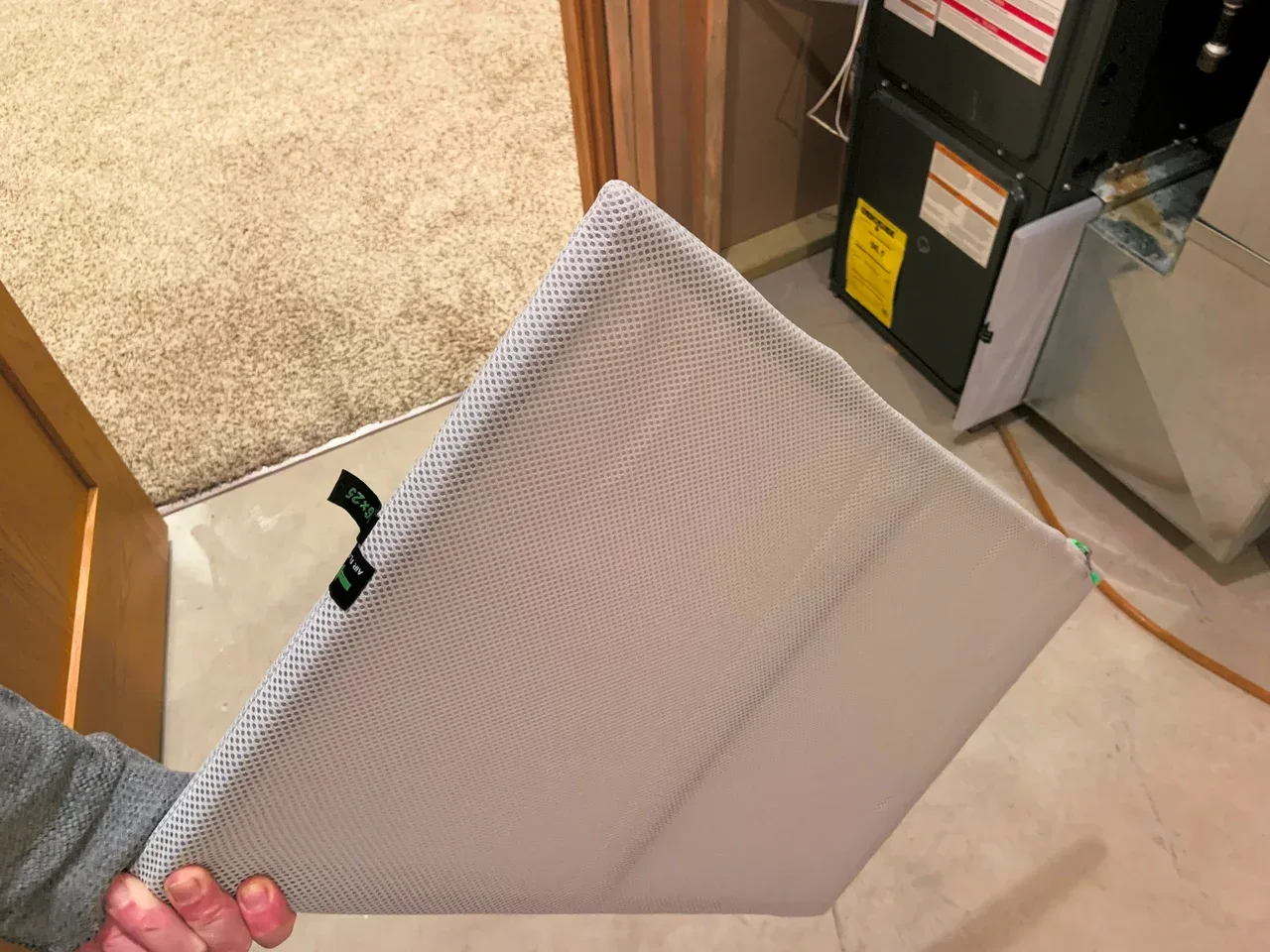
Buying an HVAC filter by the approximate width of the old one can leave a gap or create an unsuitable fit. Buying the highest filtration rating available can also be the wrong choice for the system. Before ordering, identify the equipment, the filter location and the manufacturer's requirements.
Record the complete specification
Find the system manual or the service record and note the required filter type, dimensions and permitted performance range. Photograph the installed filter's label and airflow arrow before removal. The nominal size printed on a box may differ from the actual measured size, so compare both where the supplier provides them.
Do not assume that the old filter was correct merely because it was present when you moved in. A bent frame, improvised packing or obvious gap is worth discussing with the HVAC provider. Systems can also have more than one filter location, so confirm the arrangement rather than adding filters everywhere a grille appears.
Some filters are disposable; others have a manufacturer-approved cleaning process. Do not wash a disposable filter or substitute a permanent design without confirming compatibility. Keep the equipment off as directed while accessing a consumer-serviceable filter.
Inspect on a schedule, replace for the right reason
ENERGY STAR recommends checking filters monthly, especially during heavy heating or cooling use. The actual replacement schedule depends on the product, system and conditions. A reminder to inspect is more useful than an unsupported promise that every filter lasts exactly three months.
Look for accumulated dust, damage, poor seating and the date of the last change. Do not use a light-through-the-filter trick as the sole test; different clean filter materials transmit light differently. Follow the maintenance criteria in the manual and ask the service provider when uncertain.
If the filter is unusually dirty soon after replacement, consider recent renovation dust, household conditions or a system issue. Record the observation rather than simply buying a more restrictive filter. A professional can help determine whether filtration and airflow are appropriate together.
Refit without improvising the frame
Use the exact approved replacement and orient its airflow arrow correctly. Seat it in the holder without folding, trimming or leaving the access panel open. If it will not fit normally, stop and confirm the part rather than forcing it.
Write the installation date on a suitable record or on the frame if the instructions permit. Keep packaging information until you are sure the filter is correct. A photo of the model and size can make the next purchase easier, especially if several household systems use different filters.
Restart the equipment according to its instructions and watch for an unusual noise or a panel that has not secured. Persistent performance problems, recurring fault codes or airflow concerns require service; a fresh filter is not a universal repair.
Keep a useful spare, not a stockpile of guesses
Store a small supply of confirmed replacements in a clean dry location where the frames cannot be crushed. Label them by equipment if necessary. Avoid storing filters in the mechanical clearances around a furnace or air handler.
Review the specification after equipment changes. A box that fit the previous system should not quietly become the default for the new one. Update the household record with the new model, filter and service contact so the maintenance routine remains tied to what is actually installed.