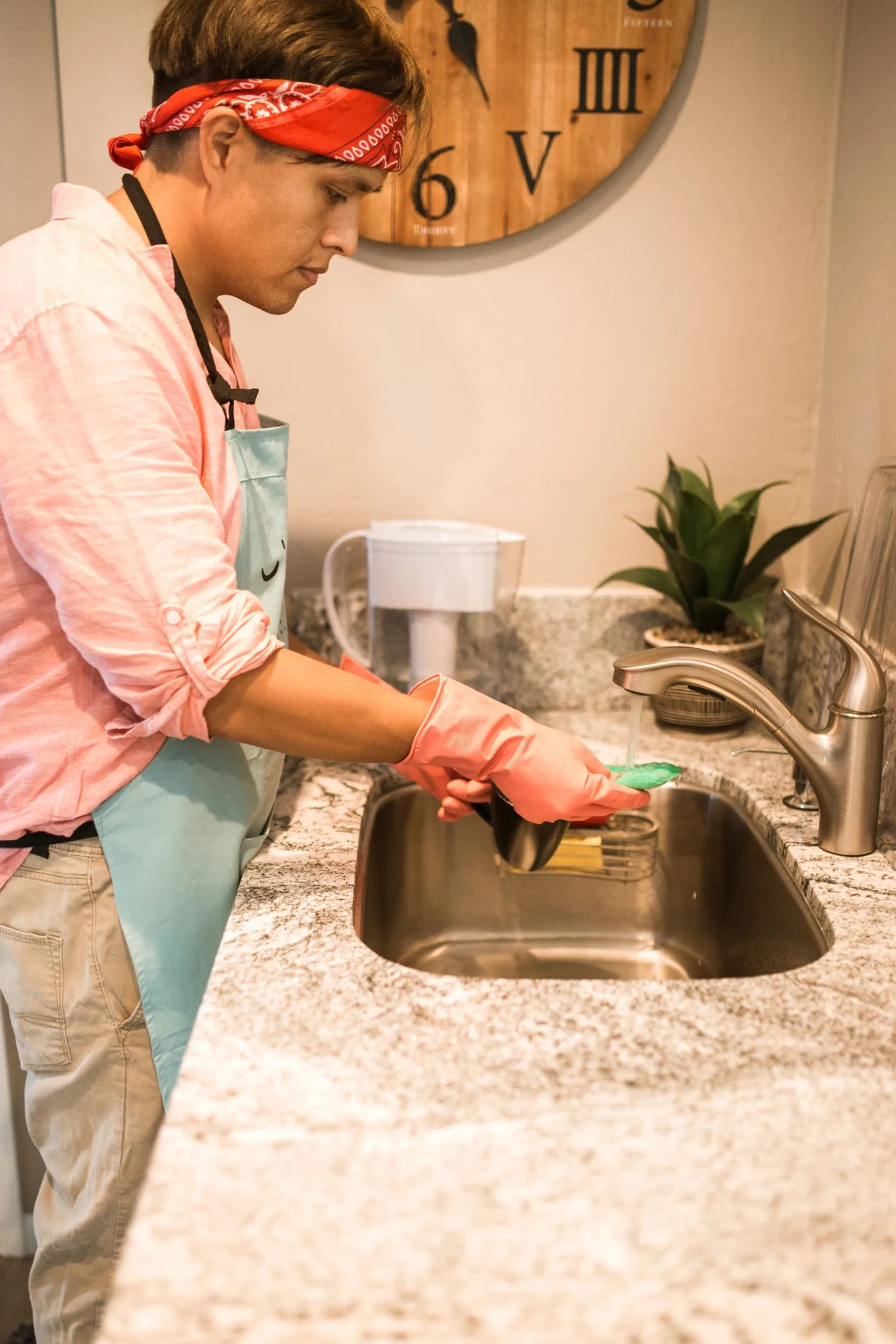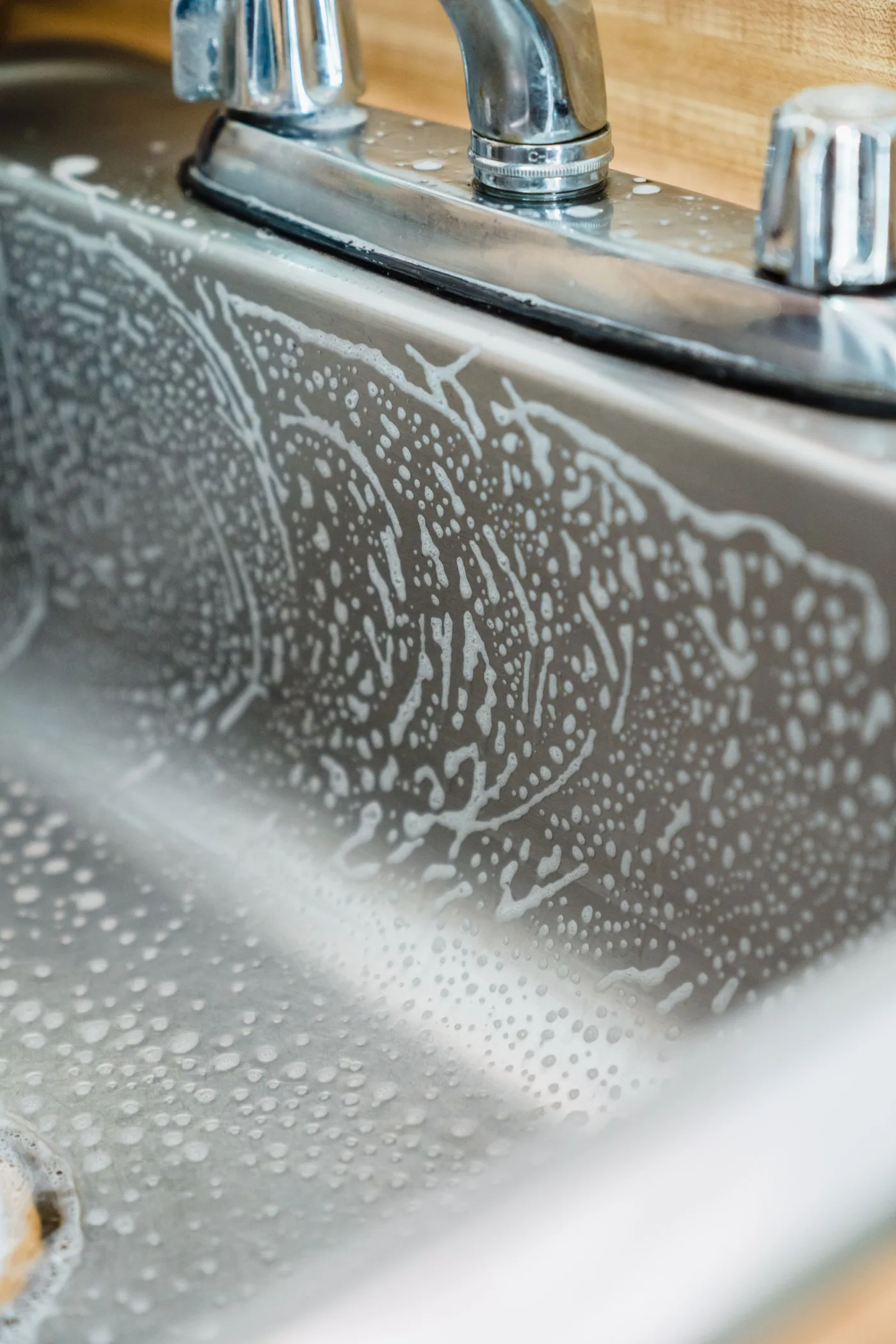
A stainless sink can look dirty even when the remaining marks are fine scratches or dried droplets. Treating every mark as stubborn food encourages more scrubbing than the surface needs. A better session separates loose debris, greasy film and permanent wear, with the aim of leaving the sink clean rather than making an older finish look newly installed.
Clear the basin before touching the finish
Lift out dishes, the removable strainer and any bottom rack. Set the rack on a towel rather than dragging its feet across the bowl. Collect food scraps for the appropriate waste container; do not use the cleaning session to push a pile of solids through the drain.
Look for grit trapped beneath a dish mat or rack foot. Rinsing that material away before wiping matters more than finding a powerful cleaner. Use a fresh soft cloth, not the scrubber that has just cleaned a roasting pan. Small particles embedded in an otherwise soft sponge can scratch.
Follow the direction of the grain
Check the sink maker's care instructions, particularly for colored or coated stainless products. For an ordinary stainless finish, work with the visible grain using a nonabrasive tool and a compatible cleaner. Sterling's care guidance specifically advises against steel wool and wire brushes. A circular scouring motion is not a useful way to remove an isolated dull patch.
Start with a small section at the back of the bowl. If the chosen product needs rinsing, complete that step before it dries. Treat the drain surround and the raised rim as separate areas so cleaner does not collect against the countertop joint. Avoid soaking the faucet base while concentrating on the sink.
Judge the result after drying
Rinse as the cleaner directs and dry with a second cloth. Inspect the bowl in ordinary light, not only under a bright flashlight that exaggerates every scratch. If a patch remains but feels smooth and does not transfer to the cloth, stop and identify it before escalating the treatment.
Clean the removable rack and its feet according to their own instructions, then return them only when the basin is clear. A damaged rack foot can undo careful cleaning each time a heavy pan is placed on it. Replace the foot or rack rather than hiding the mark under a mat.
For daily upkeep, remove scraps after washing dishes and dry obvious pools. That short finish gives water fewer opportunities to leave visible deposits. Keep a separate sink cloth nearby if it makes the habit easier, but let it dry between uses rather than leaving it bunched in the bowl.