The word lightweight can be misleading when choosing a wall anchor. A small object may pull outward when used, sit far from the wall or be handled repeatedly. Select a fastening for the actual substrate and loading pattern, not merely for the object's size or the color of the plastic anchor.
Know what the anchor will grip
Drywall over a cavity, plaster over lath, solid brick and hollow block are different bases. Identify the wall through reliable information rather than drilling a test hole. A package intended for solid masonry may not work in a hollow partition. Damaged, damp or crumbling material also changes the decision even if the general wall type is known.
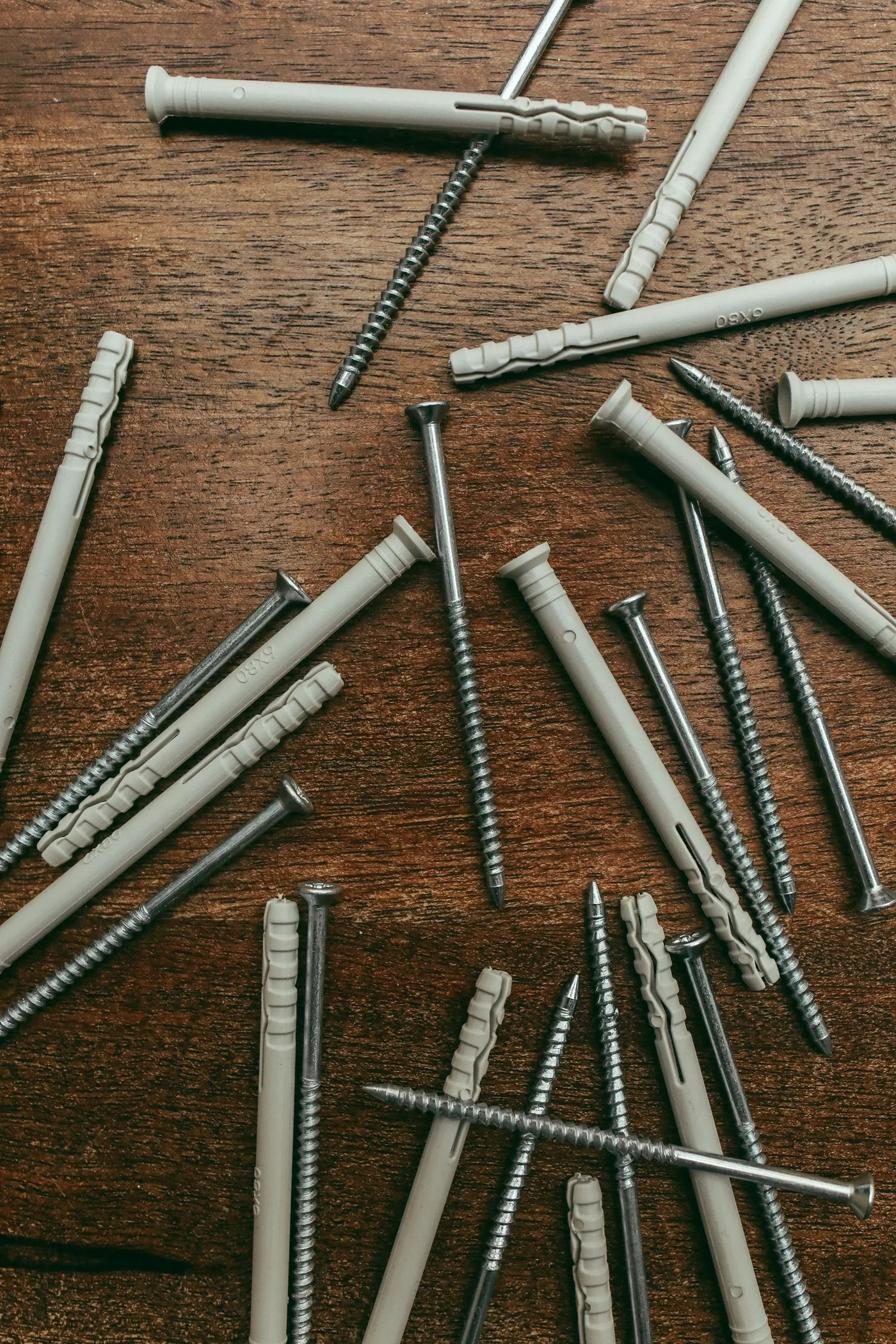
Read the complete installation information, including wall thickness, cavity clearance and compatible screw. Some anchors require a particular setting method or tool. Using a smaller hole, a longer screw or an improvised washer is not automatically an improvement; it can prevent the anchor from engaging as designed.
Account for how the fixture is used
Weigh the fixture and its expected contents. A shallow picture and a projecting coat hook of equal weight do not load the wall in the same way. A hook used by children or a rail someone might grab for support can face forces beyond its storage purpose. Grab bars and other safety equipment need an approved installation, not a general light-duty anchor.
Use the manufacturer's rating for the specified conditions and leave the application within those limits. Do not assume several closely spaced anchors multiply capacity in direct proportion. Their spacing, the bracket geometry and the wall condition matter. When the instructions do not cover the proposed arrangement, ask the manufacturer or an installer rather than extrapolating.
A hook and a display are not the same application
Consider a small decorative plaque that hangs flat and is rarely touched. Compare it with a coat hook that projects from the wall and receives a bag dropped onto it each day. Even if their resting weights are similar, the second arrangement introduces leverage and repeated handling. Choose hardware whose instructions cover that use, not just the weight written on the object.
For a row of hooks, include the possibility that several will be loaded at once. Do not assign the whole rail a capacity based on the best anchor in the set while ignoring the rail's own limits. A complete mounting system with documented conditions is easier to assess than a mixture of leftover anchors, unrelated screws and an unmarked bracket.
Resolve the location before making a hole
Check for concealed services and any restrictions on disturbing the finish. A negative reading from a basic detector does not guarantee that pipes or wiring are absent. In an older building, unknown coatings or textured materials may need assessment. Moving the fixture or using a suitable freestanding alternative can be the right answer when the wall remains uncertain.
After an appropriate installation, inspect for movement during ordinary use without hanging your body weight on it as a test. If an anchor spins, the wall cracks or the bracket pulls away, stop using the fixture and assess the failed mounting. Simply fitting the next larger anchor into the same damaged area can turn a minor problem into a larger repair.