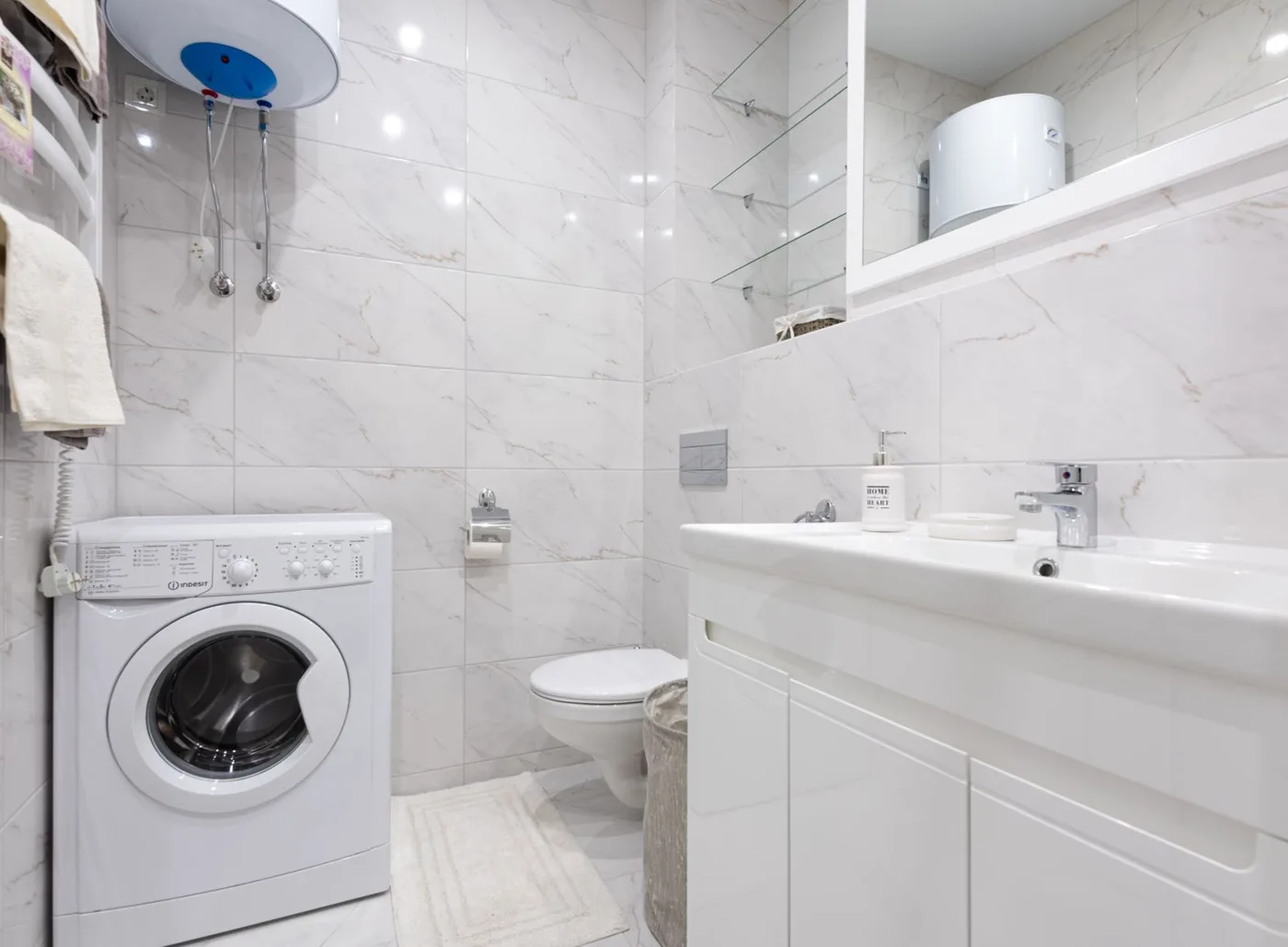
A washing machine's drum can look clean while detergent remains in the drawer and small objects sit in the door gasket. These are separate maintenance areas, and the machine's cleaning cycle may not reach every accessible fold. Use the model instructions to decide what can be removed and what should only be wiped.
Find the drawer release before pulling
Identify the model and its dispenser design. Some drawers have a release tab; others include inserts or automatic-dosing components that need a different process. Do not force a drawer past its stop or immerse an electronic component because an ordinary dispenser tray can be washed.
Photograph the inserts before removing them. Marking their arrangement in a simple sketch is also useful when several pieces look similar. Place parts in a clean basin so a small cap cannot disappear into the sink drain.
Remove residue from accessible parts
Clean removable parts by the method permitted in the manual. Whirlpool's front-loader guidance describes cleaning suitable removable dispensers and maintaining the gasket, but the exact products and temperatures remain model-specific. Rinse and dry parts as directed before reassembly.
With the machine safely off according to its instructions, inspect the accessible gasket folds for lint, hair or small objects. Wipe only where the manual allows, without pulling off the seal or its retaining band. A torn gasket or continuing leak needs service.
Do not mix washer-cleaning products or add several home remedies to one cycle. Use the specified maintenance cycle and approved cleaner if required. Keep laundry out of a cycle that is intended to run empty.
Check the cause of recurring buildup
Review detergent type and dose against the machine instructions, load size and detergent concentration. Filling to a maximum mark is not necessarily the correct amount for every load. A dosing problem will not be solved permanently by scrubbing the drawer more often.
Check that inserts are seated and that the drawer closes normally. If water leaks from the front or detergent remains undispensed after correct cleaning, record the symptoms and contact support instead of poking into internal channels.
Let accessible moisture dry in the way the manufacturer recommends, while keeping children and pets from entering or playing with the appliance. Leaving a door open is not suitable if it creates an access hazard.
Keep the manual's maintenance schedule near the laundry supplies or in a household note. Include the cleaner used and any recurring residue location. That makes a service inquiry more useful than reporting only that the washer sometimes smells.