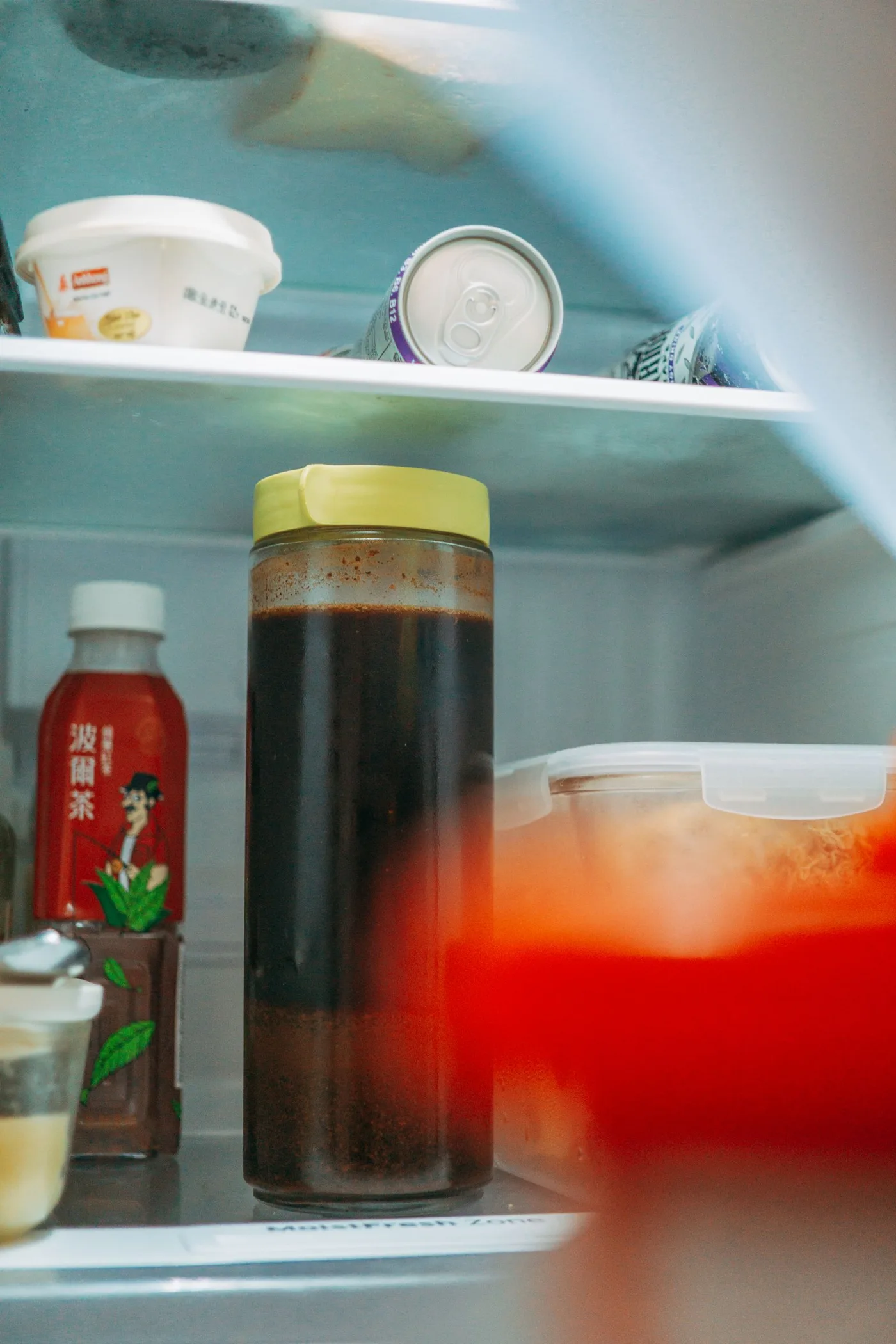
Refrigerator shelves are awkward to clean because the food needs to stay cold while the glass should not experience a sudden temperature change. Treat the job as a short sequence with a prepared holding area, not as an invitation to leave every door open while searching for a sponge.
Prepare before emptying
Choose a time when the refrigerator is relatively uncrowded. Set up a clean padded surface for shelves and a suitable cold holding space for perishable food. Keep chilled items cold throughout the work and follow food-safety guidance for any food whose temperature history is uncertain.
Photograph the shelf layout before removing anything. Adjustable rails and split shelves can be confusing once several pieces are on the counter. Clean one section at a time where possible, keeping the remaining food organized and the door closed between stages.
Give glass time to adjust
Follow the manual's shelf-removal directions and use both hands. Whirlpool warns that cold glass shelves can break when exposed to warm water or impact. Do not take a shelf straight from the refrigerator into a hot sink, and do not set its edge against a hard faucet.
Let the removed shelf adjust as directed before washing with an approved method. Avoid assuming that dishwasher-safe means appropriate for every shelf, frame or attached light. A part with electrical components needs its own instructions. Do not separate bonded trim just because a crumb is visible beneath it.
Wash over a protected sink or work surface, keeping a secure grip. Focus on corners, edges and the underside where dried drips are easy to miss. Rinse away cleaner as instructed and dry the shelf before reinstalling it. Check that supports and rails are seated, rather than relying on a quick push.
Use the empty space to prevent repeat spills
Wipe the accessible cabinet area with the refrigerator's approved product and a controlled amount of moisture. Do not spray into vents or controls. Clean a sticky container bottom before returning it, otherwise the newly washed shelf immediately inherits the same ring.
Group foods so heavy containers do not need to be lifted over fragile jars. Keep the original airflow clearances and do not cover shelves with liners unless the appliance permits them. A shallow removable tray for compatible items may make cleanup easier, but it must not obstruct vents.
Check the finished arrangement before closing the door: no shelf rocks, no drawer catches on a misplaced rail and no bottle holds the door ajar. Restore food promptly to safe refrigeration. If a shelf is chipped or cracked, replace it with the specified part instead of concealing the damage under a tray.