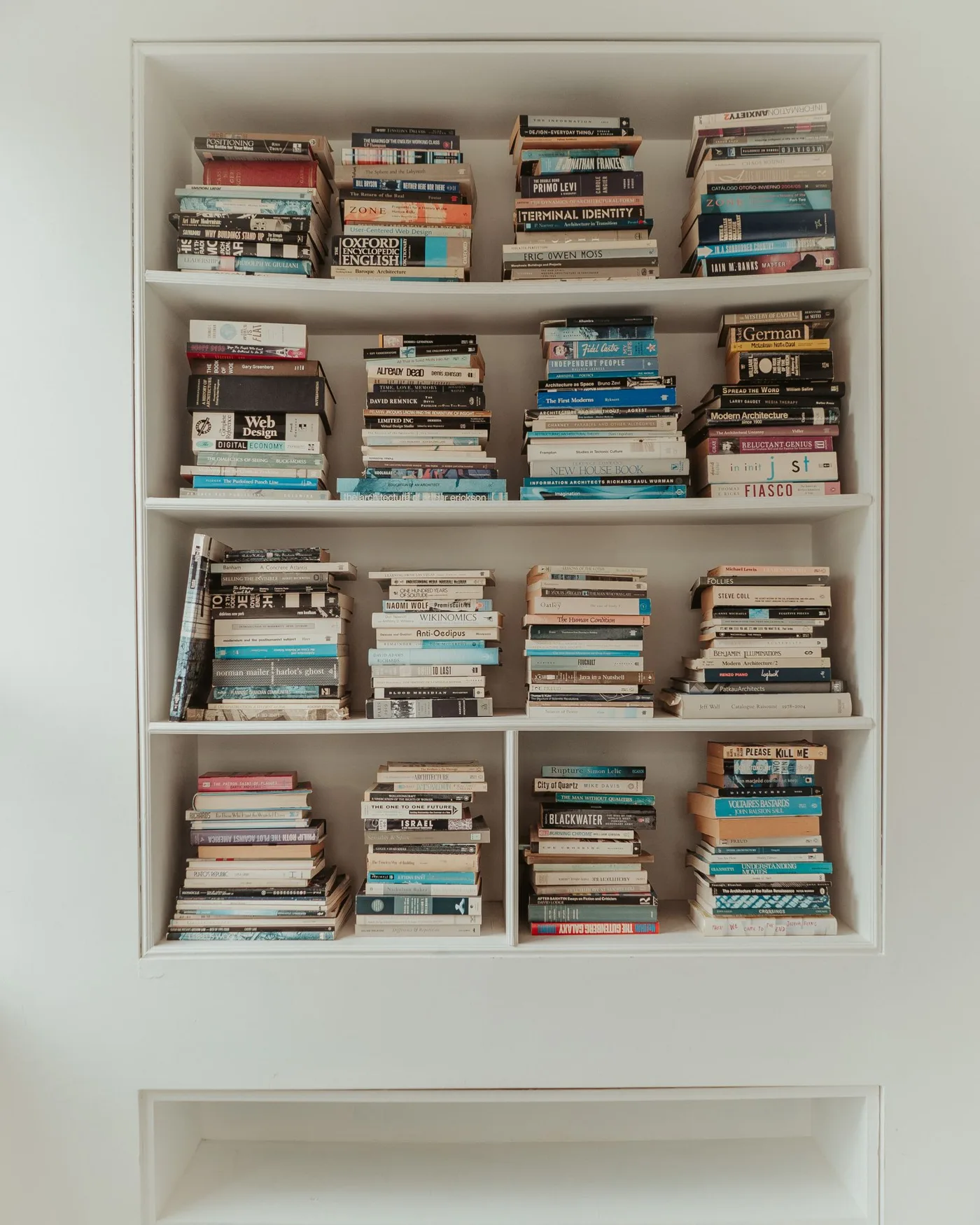
A bookshelf is easier to clean when its order survives the process. Removing every book at once creates heavy piles, hides the original arrangement and leaves nowhere to place fragile objects. Work shelf by shelf, with a clear landing area and a plan for returning only dry, dusted items.
Make a temporary map
Photograph the shelves before starting, especially if books are arranged by subject or series. Choose a clean table or cart nearby and protect its surface. Do not create tall unstable stacks on the floor where somebody will need to step around them.
Start at the highest shelf you can reach safely. For higher areas, use suitable help rather than standing on the shelving or a chair. Check that the unit is stable; wobbling or damaged supports should be addressed before a cleaning session changes the distribution of weight.
Move a manageable group
Take out a short run of books, supporting each volume rather than pulling hard at the top of its spine. Keep the group in order on the landing area. Use a gentle dry method for ordinary dust on books, taking particular care with loose jackets and damaged bindings.
Clean the exposed shelf according to its material. A dry dusting may be enough; if a damp wipe is permitted, let the surface dry completely before books return. Do not spray a cleaner into an occupied shelf or onto paper.
The Library of Congress provides preservation guidance for books, including when to seek conservation help. A treasured volume with powdery leather, fragile pages or suspected mold is not a routine wipe-down project. Set it aside safely for appropriate advice instead of brushing it over the rest of the collection.
Return with less friction next time
Replace the cleaned group before moving to the next section. Leave enough room to remove a book without dragging adjacent covers. Overpacked shelves make normal use and later cleaning harder, even when the arrangement looks neat.
Dust decorative items separately, checking their bases before putting them back. A damp planter or a rough ceramic foot can damage both the shelf and nearby books. Use suitable protection without trapping moisture beneath an object.
Finish the lower shelves and the accessible floor around the unit. Keep a note of items that need repair or rehoming, but do not let a cleaning task become an all-day cataloging project. A small box for decisions can preserve momentum.
For upkeep, choose one short section when dust becomes visible. Maintaining a limited area thoroughly is more achievable than repeatedly planning a complete library clear-out. The original photograph can be deleted or retained as a reference once everything is back in place.