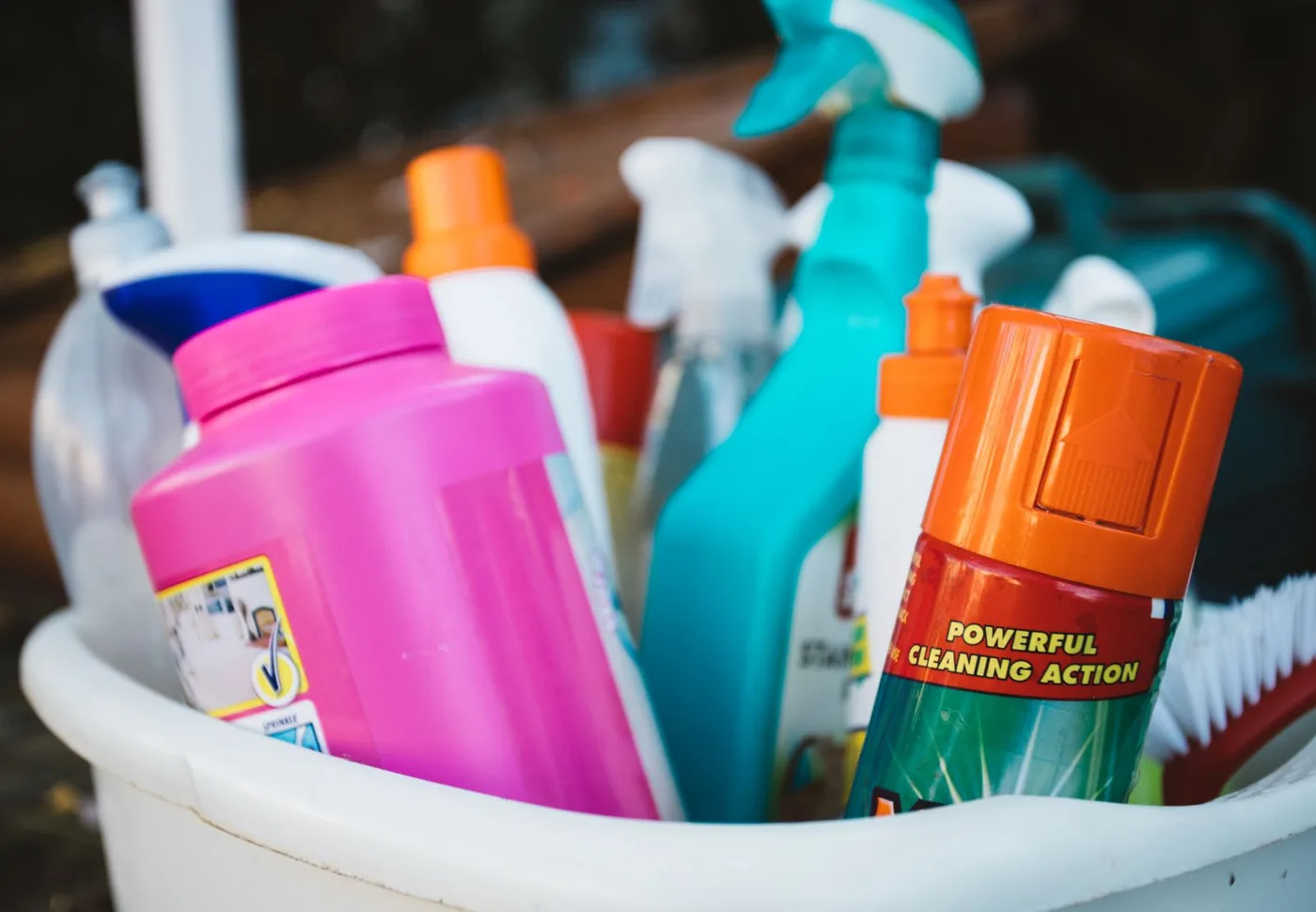
A cleaning caddy should carry the tools for the job in front of you, not the entire cupboard. An overloaded basket is awkward to lift and makes it easier to grab the wrong bottle. Start with your home's surfaces and storage constraints before deciding which compartments or accessories are useful.
Build around tasks, not a shopping list
List the surfaces you clean regularly and the products already approved for them. A kitchen with stone counters needs a different selection from one with laminate. Keep specialist products in their normal safe storage until required instead of carrying every possible treatment from room to room.
Choose a caddy that you can lift comfortably when loaded. Test it with the actual bottles before buying extra containers. A sturdy handle and stable base matter more than the number of slots, particularly when the basket is set down on a narrow shelf.
Keep identification and separation visible
Leave products in their original labeled packaging. Similar refillable bottles can make instructions and warnings harder to distinguish. Place bottles upright and keep trigger heads from pressing against another item during carrying.
Separate clean cloths from used ones and keep toilet-area tools out of a general kitchen caddy. A removable pouch for dry cloths may help, provided it does not trap damp material. Small brushes should be labeled or assigned clearly enough that another household member understands their role.
Do not store incompatible chemicals together or allow residues to collect in the base. Follow each product's storage directions. CDC's household-cleaning guidance emphasizes safe storage and not mixing chemicals; a tidy-looking basket does not remove those requirements.
Make return and storage part of the routine
After a job, remove used cloths, wipe any bottle drips and check the caddy for pooled liquid. Clean and dry the empty base when needed. Do not put a damp closed basket into a cupboard and expect it to be ready for the next task.
Store the caddy where children and pets cannot access it and away from food. A convenient location is not automatically a safe one. If different rooms need different products, two modest task-specific arrangements may be easier to manage than one heavy universal kit.
Review what you actually used after several cleaning sessions. Remove duplicates and products that do not suit any surface in the home. Dispose of unwanted products according to their labels and local instructions rather than combining leftovers to save space.
Keep the relevant care notes with the household documents, not as loose paper under wet bottles. A short list of approved products by surface can help a hired cleaner or another resident maintain the same compatible routine.