A smoke-alarm check should follow the instructions for each alarm in the home, not a single memory about changing batteries. Sealed-battery, replaceable-battery and hardwired units have different maintenance details. Build a small record so testing, faults and end-of-life replacement do not get confused.
List the alarms without removing them unnecessarily
Record each location, manufacturer, model and accessible date information. Use the manual or label as instructed to identify the replacement date. If an alarm is too high to inspect safely, arrange help rather than climbing on furniture.
Keep smoke alarms distinct from carbon-monoxide alarms and combination units in the record. Their sounds, service lives and instructions may differ. A list that calls everything a detector can make a future chirp harder to interpret.
If an alarm is missing, damaged or of unknown condition, ask the local fire department's nonemergency service or a qualified installer about the appropriate next action. Do not wait for a monthly reminder to address an obvious absence of protection.
Test with the approved control
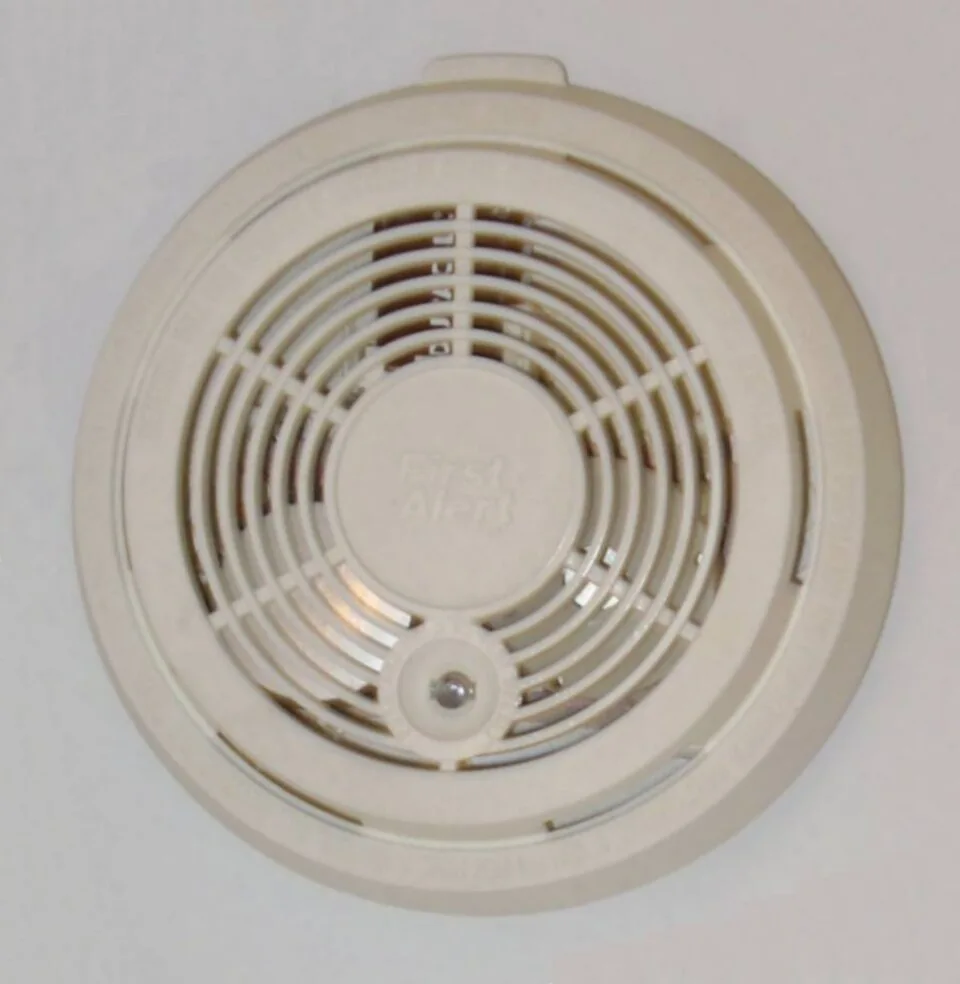
The US Fire Administration advises monthly smoke-alarm testing and care according to the manufacturer's instructions. Use the specified test method, normally the test button, and tell household members before beginning so the planned test is not mistaken for an emergency.
Do not use flame, smoke from burning material or an improvised spray to test an alarm. Follow the manual on how long to hold the control and what response to expect. If interconnected alarms are installed, check the system's prescribed test process rather than assuming one sound confirms every unit.
Arrange safe access that allows you to operate the control without overreaching. Some models support an approved remote test method; others require direct access. A broom handle is not a universal substitute for the manufacturer's procedure.
Respond to the result, including a failed test
Record the date and whether the expected response occurred. A failed or abnormal test requires the action in the manual, not a tick in the calendar. Do not disable the unit and leave the room unprotected while waiting for a more convenient time.
Use only the specified replacement battery where the design allows battery changes. Sealed batteries are not an invitation to open the housing. Hardwired work and uncertainty about electrical connections belong to a qualified professional.
USFA commonly advises replacing smoke alarms at ten years, with manufacturer instructions governing particular designs and long-life units. Check the actual end-of-life information rather than treating a successful button test as permission to keep an expired alarm indefinitely.
Keep nuisance sounds from becoming a habit of disconnection
Learn the difference between the unit's alarm, low-battery and fault indications from its instructions. A recurring chirp should be investigated, not muffled. Do not assume every chirp can be solved by fitting another battery.
If cooking repeatedly triggers an alarm, use the approved hush feature and seek advice about the installation or cooking conditions. Never remove a battery as the household's routine response. An actual sounding alarm must be treated according to the household escape plan; a previous nuisance event does not prove the next one is harmless.
Store manuals and replacement records together, and make sure responsible residents know where they are. Testing is one part of preparedness, alongside an escape plan and keeping routes usable. The record should support action, not create the impression that one monthly sound check guarantees safety for every situation.