Plates and glasses share a cupboard, but they do not necessarily belong in the same packing layer. A heavy stack of dishes can put pressure on a glass rim or handle even when both objects are wrapped. Start by separating shapes and identifying the parts that are most easily chipped, rather than filling a carton in the order you empty the shelf.
Make a packing surface where pieces cannot roll away
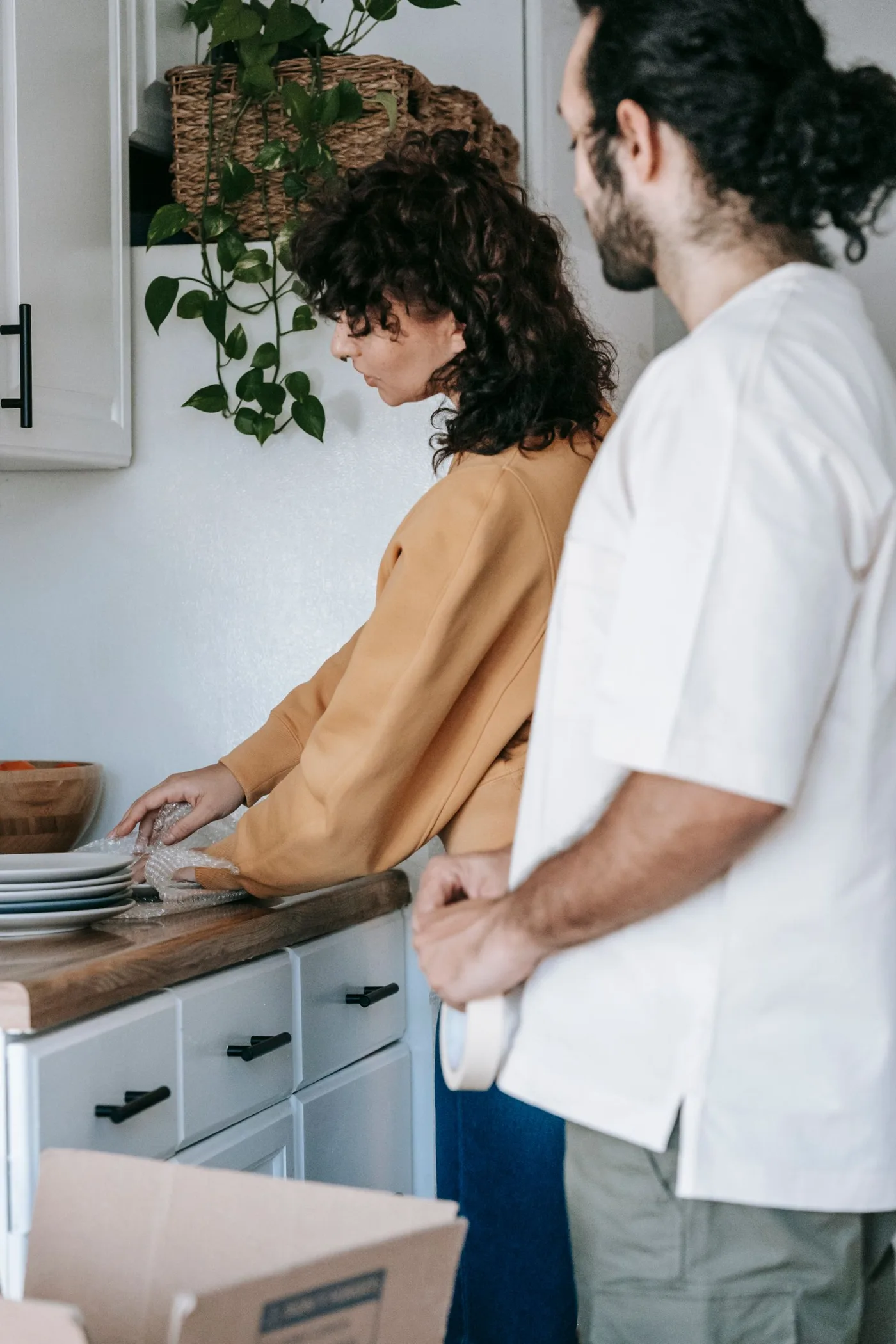
Clear a stable table and put cushioning within reach. Inspect each item as it comes out of the cupboard. Keep cracked or unstable pieces separate so nobody unexpectedly handles them later. For valuable, antique or unusually shaped objects, obtain packing advice specific to the item; a generic household method is not a guarantee against damage.
Choose a container and dividers intended for fragile household contents, following the supplier's loading directions. U-Haul, for example, publishes guidance for its dish and cell kits, but the configuration is specific to those products. Do not assume a divider from one box will support another box's dimensions or a much taller glass.
Protect contact points, not just the outside of the box
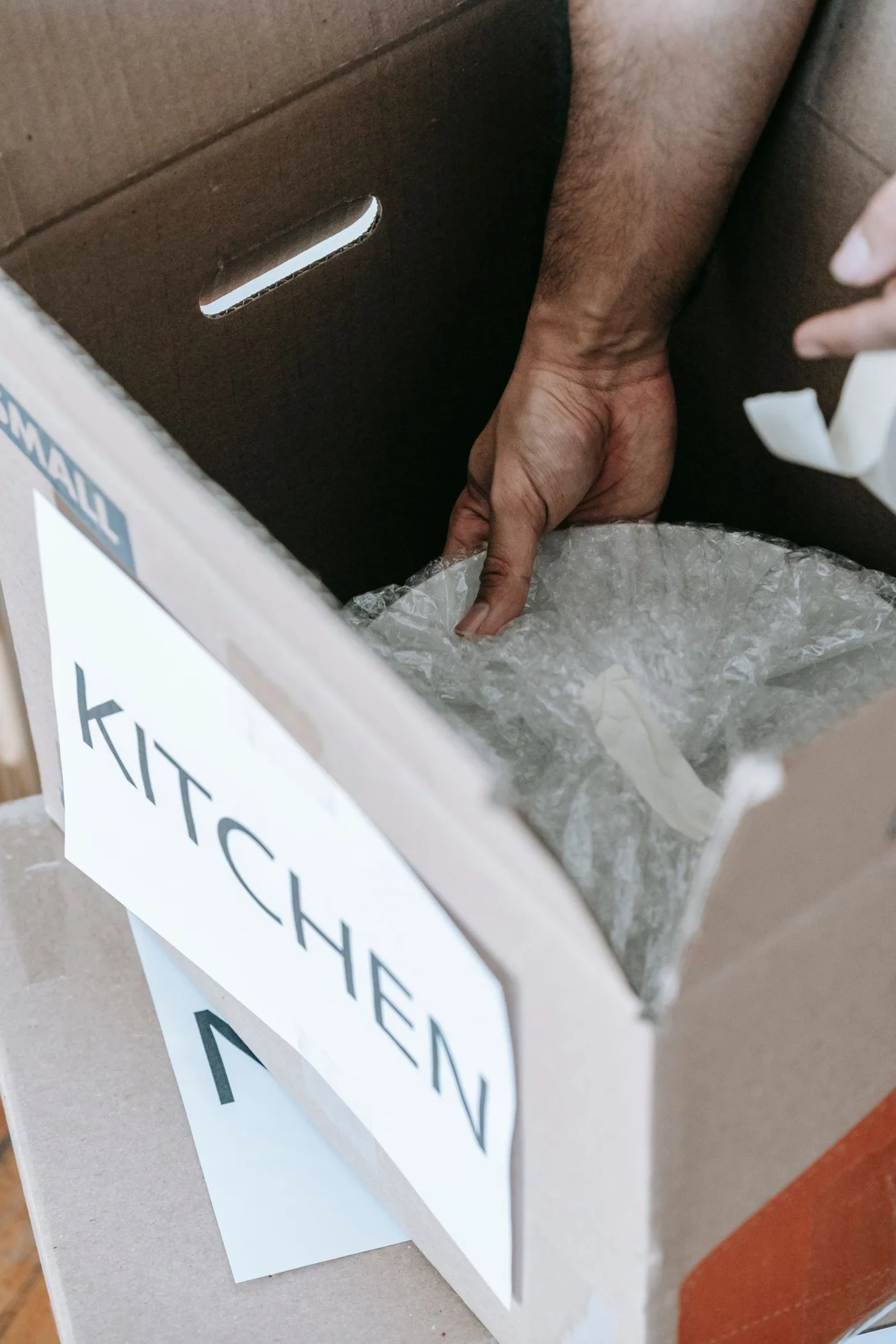
Wrap individual pieces so that hard surfaces cannot rub directly together. Pay particular attention to rims, handles, stems and projecting decoration. Cushion the bottom and prevent objects from moving into one another. If you can feel a hard protrusion pressing against the carton wall, rearrange the load instead of assuming another layer on top will solve it.
Keep the weight of plates from bearing down on delicate glassware. Use separate boxes where needed, and do not push in an extra piece just because there appears to be a small opening. The space around a fragile object is part of its protection. Avoid overfilling to the point that closing the flaps requires pressure on the contents.
Label for unloading and careful unpacking
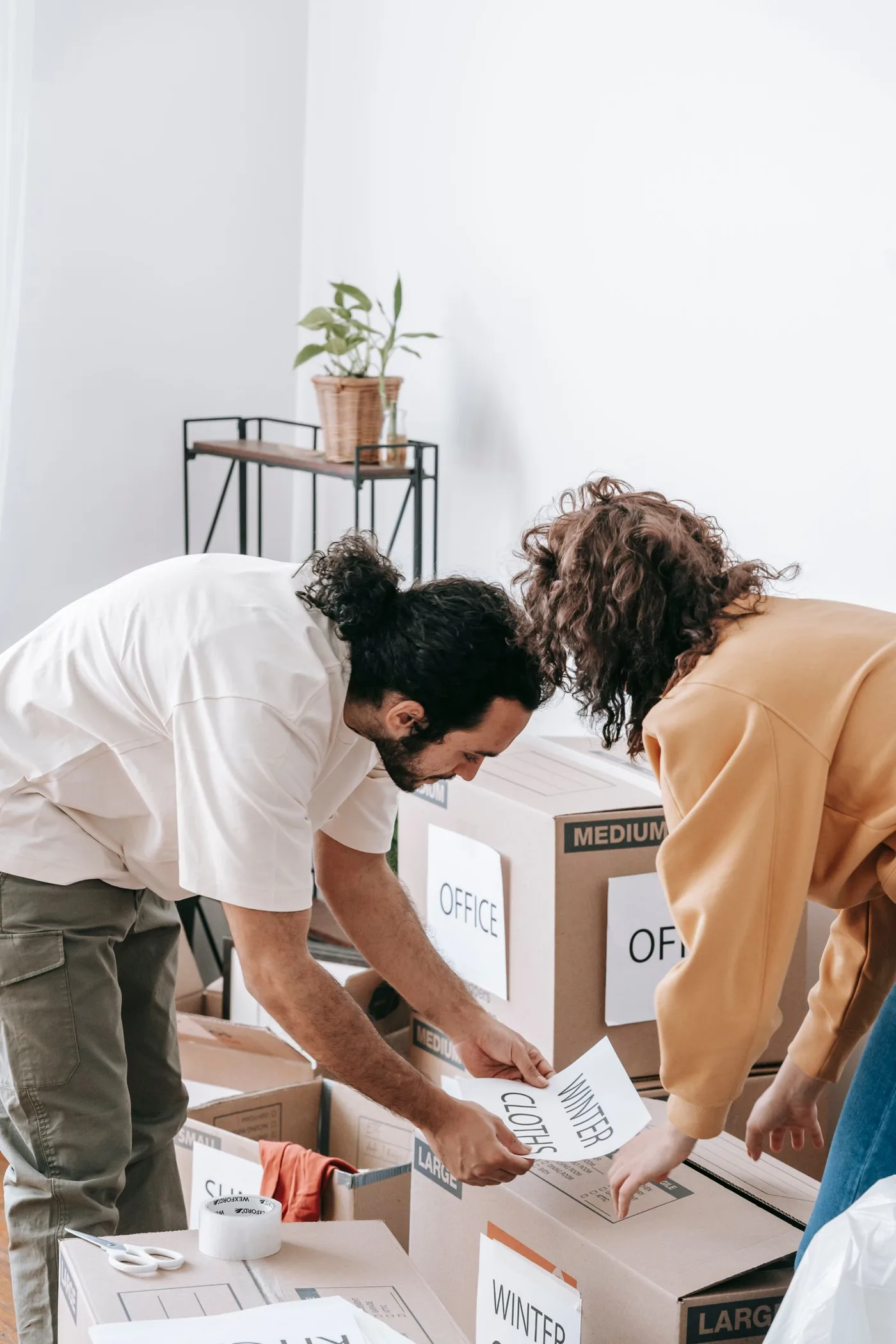
Mark the destination and identify fragile contents on more than one visible side. Labels support good handling but cannot compensate for poor cushioning or a weak carton. Tell the mover about any special items in advance and clarify who is responsible for packing them. Keep the package arrangement consistent with the agreed moving method.
At the new home, open the carton on a stable surface with room to lay out the contents. Remove loose cushioning carefully and check it before discarding it; small lids and saucers are easy to overlook. Unpack one container at a time rather than placing a crowded row of glasses beside the edge of a counter. Keep children and pets away from the packing debris until you have checked for breakage and cleared it safely.