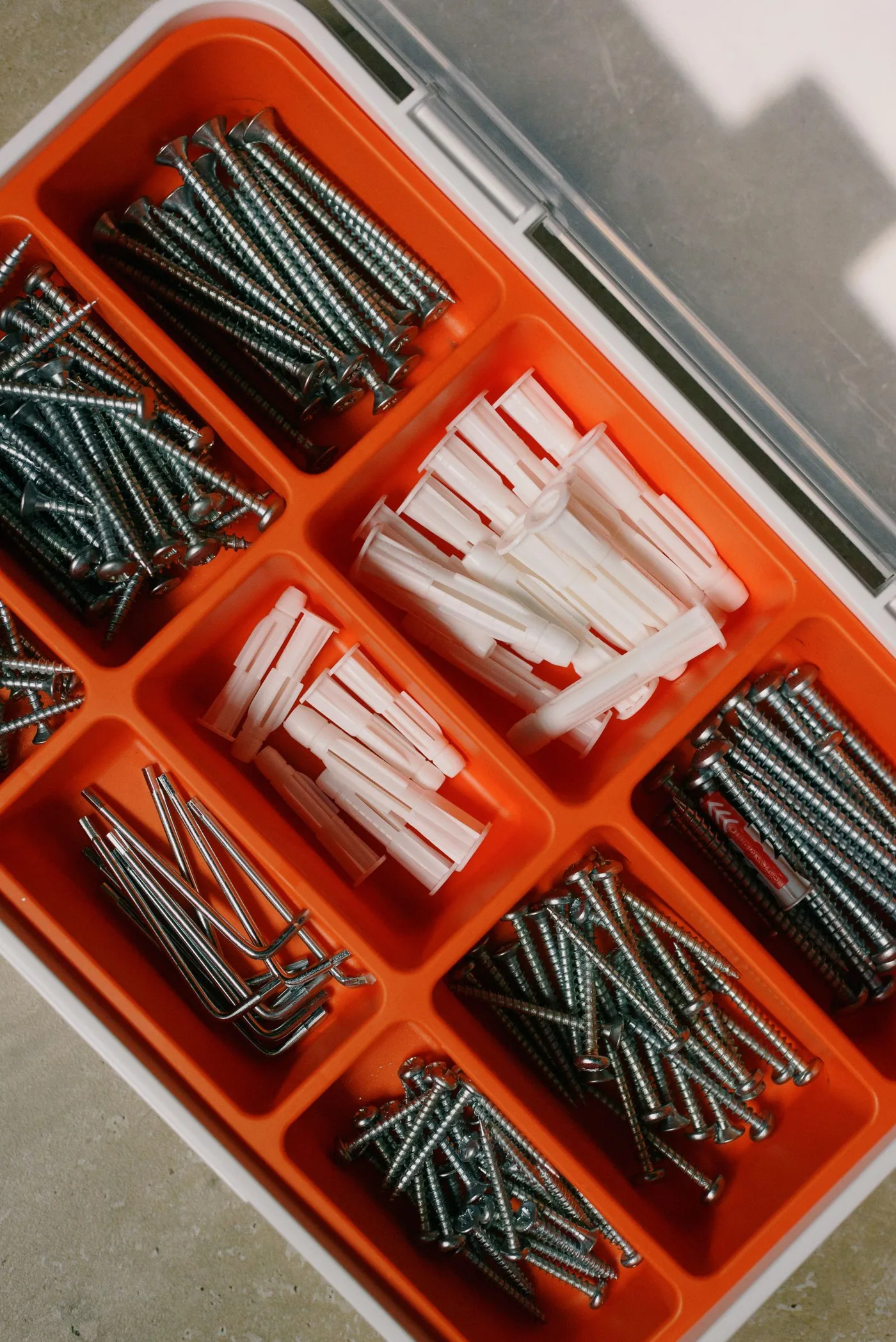
A jar of mixed screws seems economical until you need one particular thread and cannot identify it. A useful fastener system preserves the information that makes each piece safe to reuse. It does not require a workshop wall of drawers; a small divided box and clear labels can be enough for ordinary household repairs.
Preserve each fastener's identity
Separate screws, bolts, nuts, washers, wall anchors and furniture-specific fittings. Within those groups, distinguish thread types and head styles. Two screws of similar length may be intended for very different materials. A machine screw should not be substituted for a wood screw simply because both fit through the same opening.
Keep specialized hardware with the furniture or appliance instructions it belongs to. Label a small bag with the item name and the location from which the parts came. If you cannot identify an unusual fitting, retain a photograph of the original arrangement. Context is often more useful than a drawer labeled miscellaneous metal.
For purchased fasteners, save the package information: diameter, length, thread, material and any specific use. Do not mix metric and inch machine screws in one unmarked compartment. A thread gauge or help from a hardware supplier is preferable to testing an unknown screw by forcing it into a valuable fitting.
Set aside bent, rusty, stripped or damaged pieces rather than returning them to the working supply. Some fasteners and anchors are intended for a single installation or a particular system. Follow their instructions instead of assuming that anything removed intact can be reused. Unknown structural or safety-critical hardware should not enter the ordinary repair assortment.
Design the box for the way you search
Use shallow compartments that let you see the contents without pouring everything onto the floor. Put common small repair sizes near the front and keep heavy pieces in containers that can carry them. Ensure the lid actually keeps small items in their own spaces when the box is moved. Many inexpensive organizers have gaps that allow thin screws to migrate.
Label the compartment and, where possible, place the original package inside it. Store the box dry and away from children. After a project, return only positively identified leftovers to their matching section. If the supply becomes crowded, remove duplicates or unused oddities rather than making the labels broader until every drawer again means almost anything.