An empty cupboard can feel like an invitation to unpack the nearest box. That is how rarely used serving dishes end up beside the kettle while everyday mugs move to a high shelf. Give the new home a little time to reveal its routines before treating every storage decision as permanent.
Unpack a working household first
Begin with the items needed for sleep, washing, basic meals and the next day's commitments. Keep essential medication and personal documents secure and accessible according to their requirements. Choose temporary locations deliberately and tell other household members where things are, so a provisional arrangement does not become a daily search.
Inspect cupboards and shelves before loading them. Clean with a method suitable for the material, allow surfaces to dry and check for damage or signs of pests. Confirm that shelves and supports can handle the intended load. Do not use unpacking pressure as a reason to ignore a loose bracket or obstruct necessary access to equipment.
Let tasks determine the next shelf
Watch where activities happen. Place breakfast items near the preparation area if that makes sense in the room; store cleaning tools where they can be retrieved safely without crossing the whole home. Heavy objects should be easy to handle without awkward overhead lifting. Dangerous products still need secure, label-compliant storage even if another position would be more convenient.
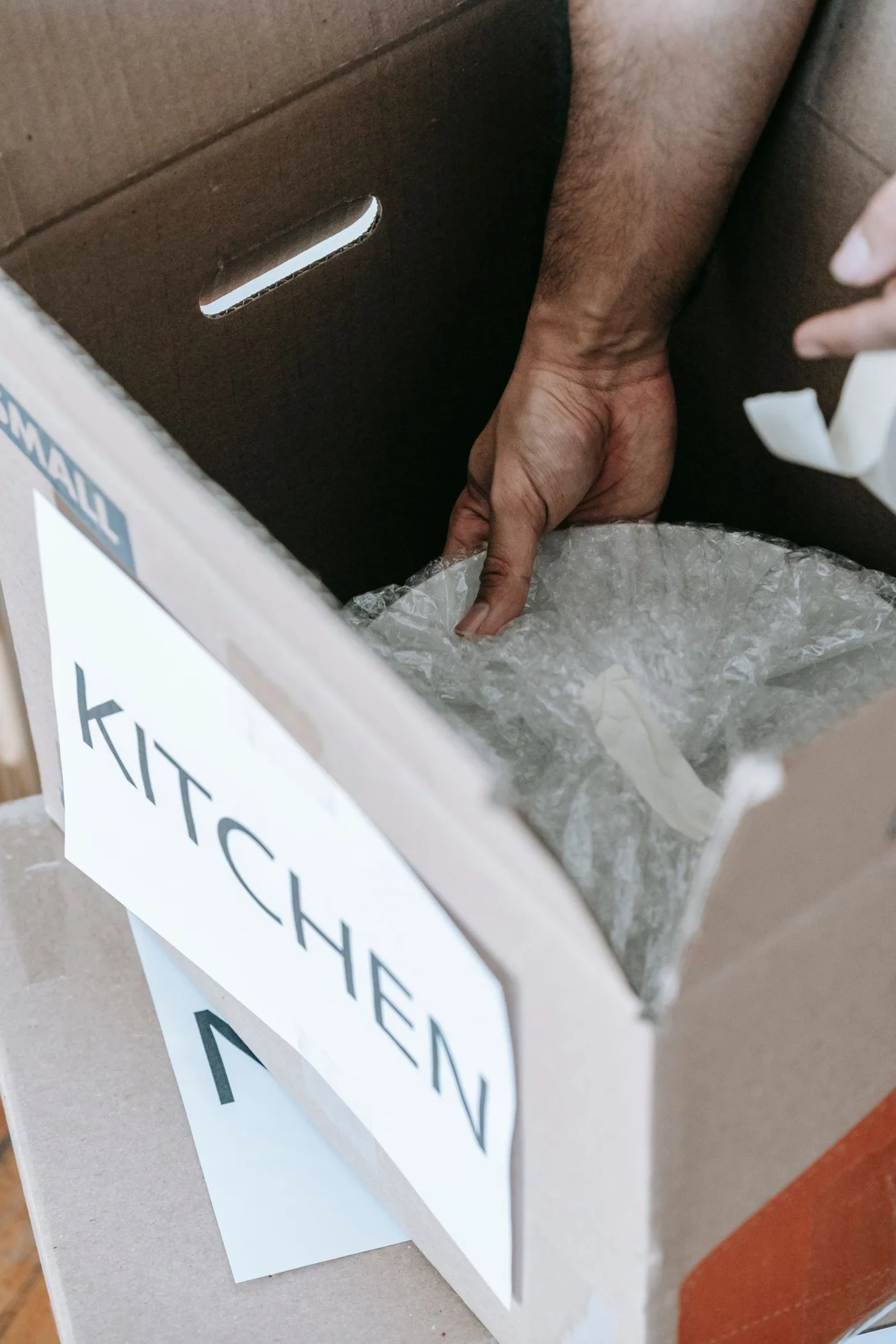
A partly empty cabinet is useful while the layout is being tested. Keep uncertain items in a clearly labeled box rather than distributing them across several rooms. Set a date to review that box, however, so temporary storage does not become an indefinite pile. If the item has no plausible role in the new space, consider whether it belongs in the household at all.
Delay the organizers until the pattern is clear
Measure shelves and observe what needs separating before buying baskets or inserts. A matching set can use more space than the objects it is meant to organize. Try a simple arrangement first, then purchase only the pieces that solve a demonstrated problem.
After several normal days, make a small number of changes and explain them to everyone who uses the space. Recycle or store moving materials through an appropriate route as boxes empty. The goal is not to finish every cupboard in the first evening; it is to avoid unpacking the same objects twice because the first arrangement was based only on available gaps.