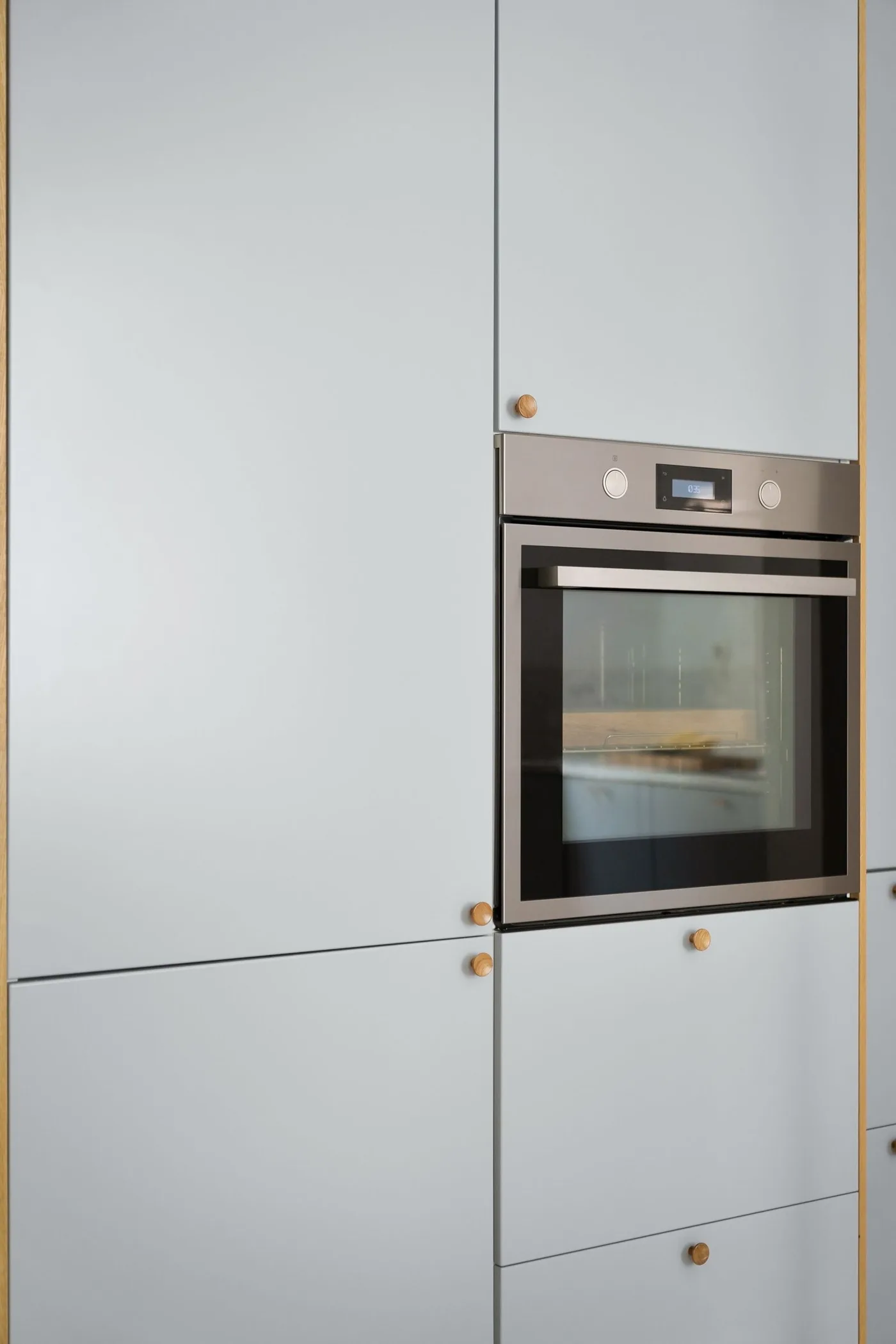
An oven does not need the same treatment after every meal. A few loose crumbs, a fresh splash and several layers of baked-on grease are different jobs. Before committing to a long clean, examine the cooled cavity and decide whether a small approved wipe will address the problem or whether the model's full cleaning process is needed.
Inspect the oven without dismantling it
With the oven off and cool, remove loose trays and look at the floor, door glass and accessible side surfaces. Note where the residue is concentrated. A spill beneath one baking dish may be manageable without treating the entire cavity, whereas widespread grease needs more time and preparation.
Do not pull out the range, remove heating elements or take apart the door to improve access. Those steps are not routine cleaning. If there is damaged glass, an unusual electrical smell, a loose component or a control fault, arrange service instead of trying to solve the symptom with cleaner.
Match the method to the lining
Find the model number and its cleaning instructions. Conventional enamel, catalytic liners, steam-clean functions and high-temperature self-clean cycles are not interchangeable. A product labeled oven cleaner is not automatically suitable for every lining or for a self-cleaning appliance.
For a minor wipe, use only the materials the manual permits. Keep liquid away from vents and controls, and do not scrub the door gasket as if it were the enamel floor. Treat racks separately; coated or sliding racks may have restrictions that plain racks do not.
A full cleaning cycle is a scheduled task, not something to start on the way out. Follow the manual on removing racks, clearing large food deposits, ventilation and keeping children and pets away. Never add an unapproved chemical to a cycle or force a locked door open.
Plan the next meal around the clean
Allow time for the oven to cool, for permitted residues to be removed and for parts to be refitted correctly. A cycle that ends just before dinner can still leave the appliance unavailable. Keep an alternative meal plan rather than rushing the final inspection.
When a wiped area remains discolored but no longer has raised residue, avoid assuming it needs a more aggressive treatment. Older enamel and glass can show wear. Manufacturer support can help distinguish a cosmetic mark from a damaged surface.
Prevent the next large spill with cookware sized for the recipe and approved spill-catching arrangements. Do not line the oven floor with foil unless the manual expressly allows it. After cooking, make a note to inspect once cool; remembering the location of a fresh spill is easier than finding it after it has been reheated several times.