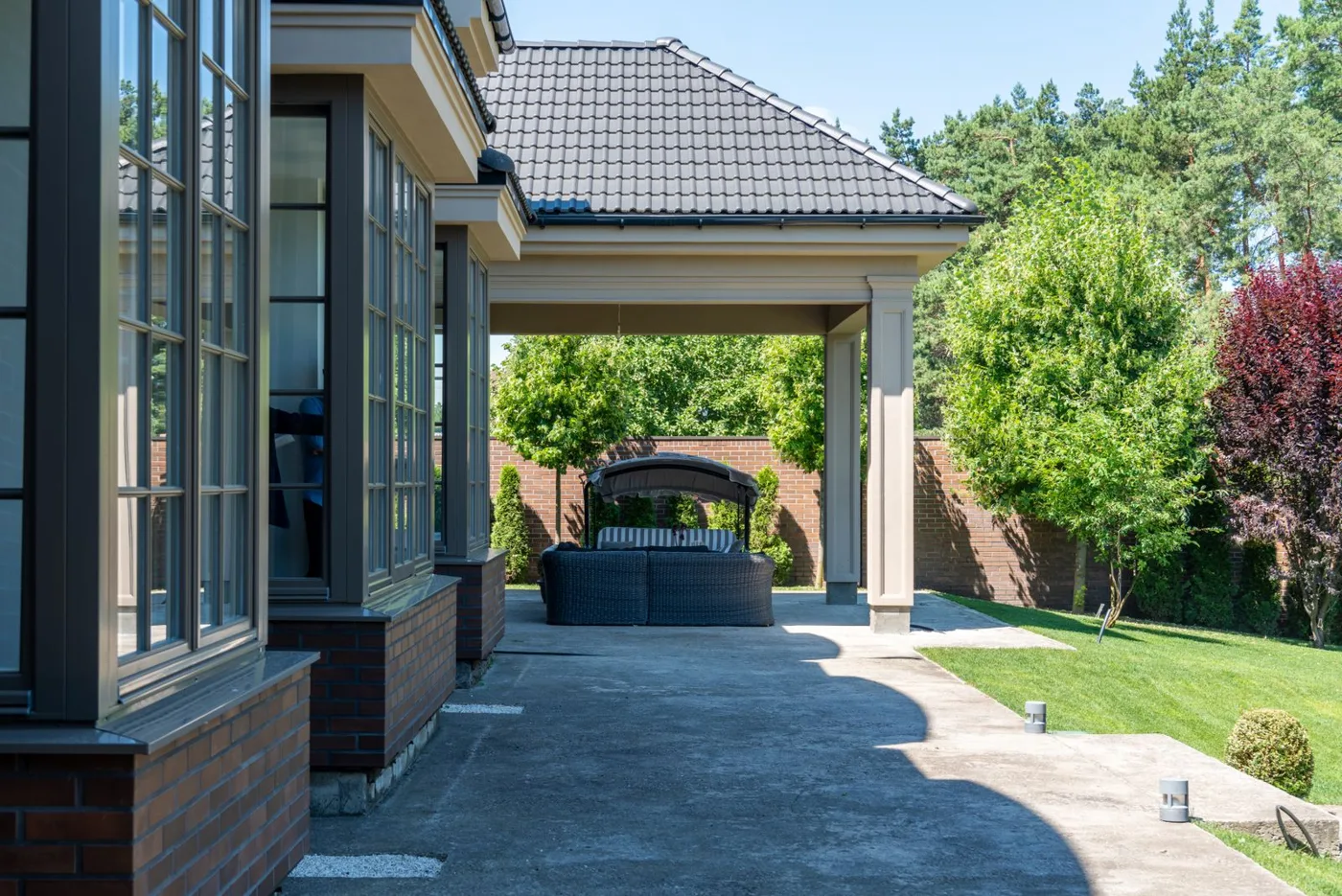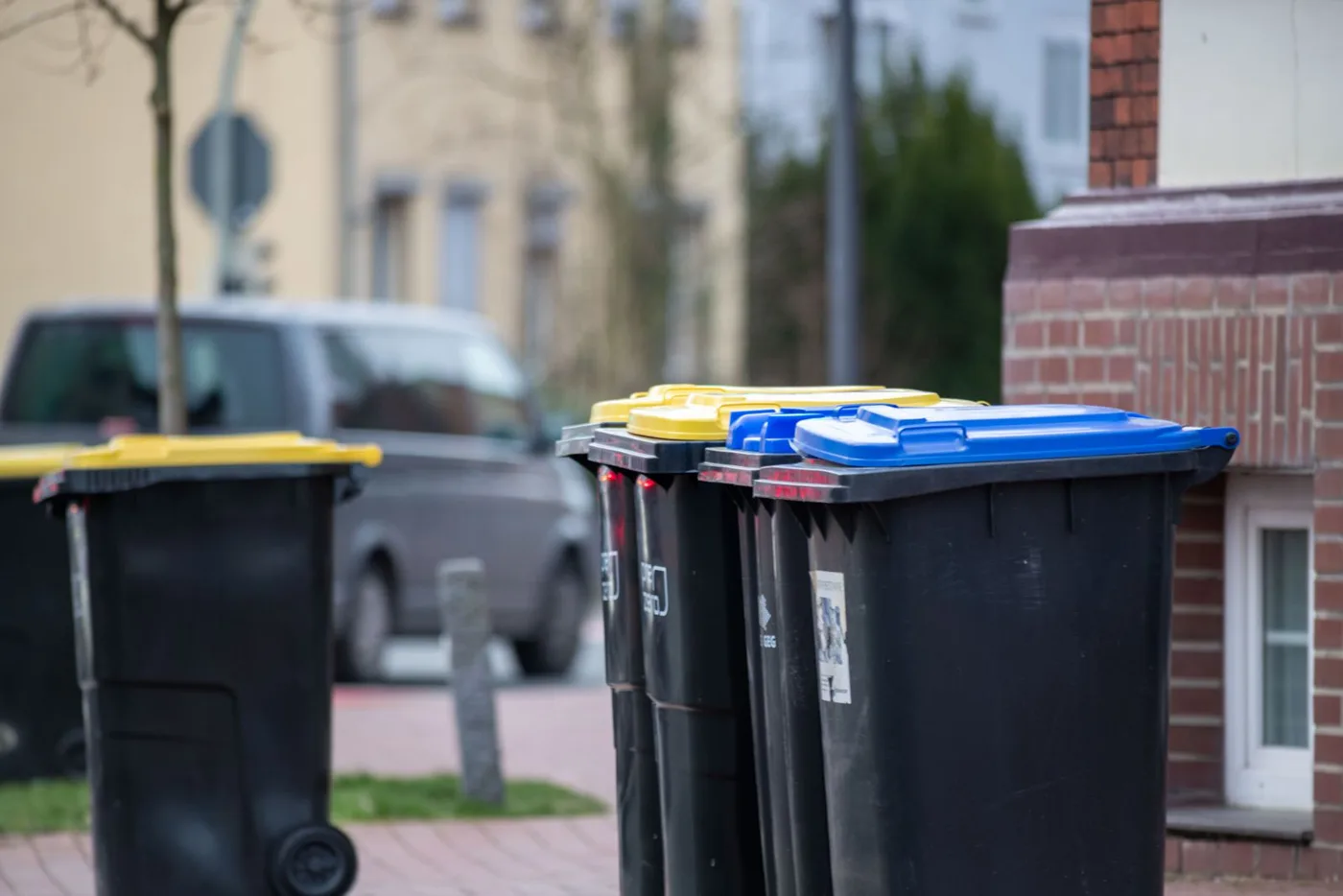
The best bin location is one you can use easily without blocking a door, drain or narrow path. It also has to work on collection day and remain manageable in wet weather. Before buying a screen or building an enclosure, test the route with the actual bins rather than planning around their appearance alone.
Start with collection and access
Check the waste provider's current rules for placement, separation and collection. Keep the distinction between the everyday storage position and the required pickup position clear. Measure gate openings and turns with lids closed and handles accessible. A bin that fits in an enclosure may still be difficult to pull out when full.
Choose a stable surface and a route that does not require lifting a loaded bin over a step. Keep emergency exits, utility access and shared walkways clear. Avoid storing bins beneath equipment that needs ventilation or against a door that opens outward. If the property is rented or shared, agree on the location before making changes.
Consider who moves the bins. A route comfortable for one person may be awkward for another with limited strength or mobility. Leave enough space to reach handles without leaning over neighboring bins. Small adjustments to orientation can reduce effort more effectively than squeezing the storage area into the smallest possible footprint.
Plan for lids, water and cleaning
Allow each lid to open fully without striking a wall or plant. Keep bins upright and closed according to the provider's guidance, and manage waste in the required bags or containers. Do not store loose rubbish around them while waiting for the next collection. That makes cleaning harder and can attract pests.
Check where rainwater and wash water will go. Avoid placing bins where they permanently sit in a puddle or block a drain grate. Clean using a method compatible with the bin and local wastewater rules; do not send dirty wash water into a storm drain. If a cleaning service is used, ask how it handles the runoff.
An enclosure should preserve ventilation, access and stability. Use an appropriate design rather than stacking loose panels around the bins. Keep its doors from swinging across a public path, and avoid creating hidden spaces that cannot be inspected or cleaned. A screen is useful only if the storage behind it remains workable.
Try the arrangement through a collection cycle before committing to permanent construction. Move the full bins out, return them and check the route after rain. If a gate catches or a wheel repeatedly sinks, resolve that problem first. A tidy-looking corner is not worth a difficult weekly maneuver.