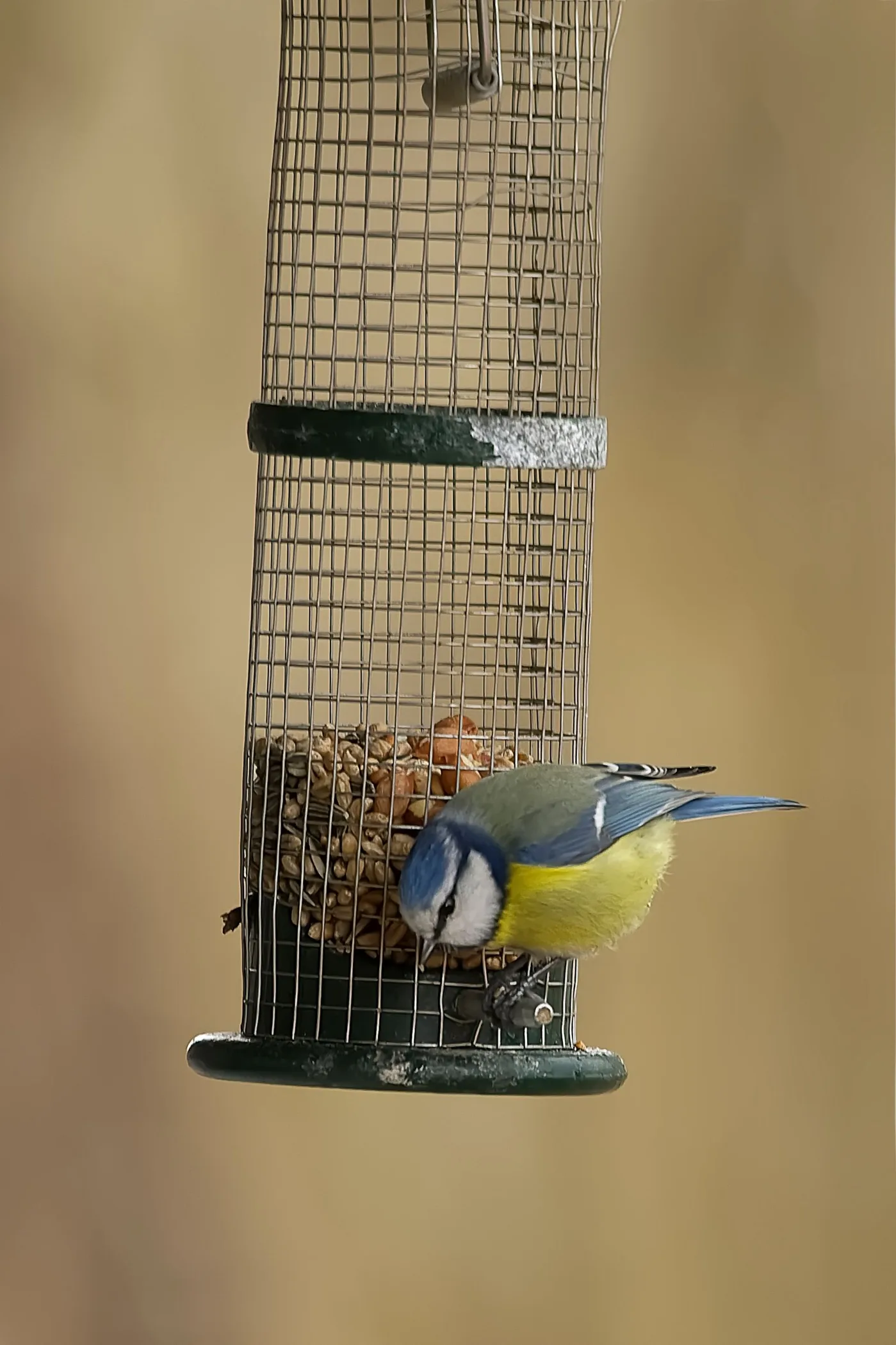
A feeder needs more than a refill when old seed, droppings or damp residue accumulate. Regular cleaning reduces contamination at a place where birds gather closely. Choose a feeder you can dismantle and dry, and follow current local wildlife advice if sick birds are reported in your area.
Check the feeder before adding food
Look for clumped, moldy or wet seed and debris around feeding ports. Discard spoiled food rather than drying it and returning it to the feeder. Check whether rain enters through a damaged lid or whether the feeder stays wet beneath foliage. Correcting the source of moisture helps, but it does not replace cleaning.
Inspect the structure for sharp edges, cracked parts and inaccessible corners. A feeder with a removable base is often easier to maintain than one that traps residue inside a sealed tube. Follow the manufacturer's disassembly instructions so small parts are not lost and any camera or electrical component is kept out of the cleaning process unless specifically designed for it.
Use a dedicated cleaning setup
Work away from food-preparation equipment and use tools reserved for the feeder. Wear suitable gloves and wash your hands afterward. Remove loose debris, then clean and disinfect using an appropriate method from the feeder maker and a reliable bird-health source. Cornell Lab guidance emphasizes regular cleaning, thorough rinsing and complete drying.
If a disinfectant is used, follow its label and the wildlife guidance for the actual product, dilution and contact time. Never mix it with other cleaners. Do not assume a fragrant household product is appropriate simply because it disinfects a bathroom. Dishwasher use is suitable only when the feeder manufacturer permits it.
Let the feeder dry before rebuilding
Rinse as required and allow all parts to dry fully before refilling. Moisture left in a seam can immediately wet fresh seed. Check that ports, drainage openings and the lid are assembled correctly. Put back only enough fresh food for the conditions and feeding activity rather than filling the largest possible reservoir by habit.
Store seed in a dry, pest-resistant container and inspect it before use. Keep the scoop clean and avoid returning food from a dirty feeder to the storage container. If the supply smells musty or shows contamination, replacement is preferable to mixing it with a new bag.
Include the ground and disease alerts
Remove accumulated seed waste and droppings beneath the feeder using an appropriate method, keeping the area away from places where children play or food is prepared. Move the feeder location if persistent buildup or poor drainage makes the current site difficult to maintain. Also consider bird-window collision guidance when choosing a new position.
If birds appear ill or local wildlife authorities advise pausing feeding, remove the feeder and follow that advice rather than relying on more frequent refilling. Do not handle sick or dead birds casually; contact the relevant local wildlife resource for instructions. Keep cleaning frequency responsive to wet weather and heavy use, not fixed to a calendar that ignores the feeder's condition.