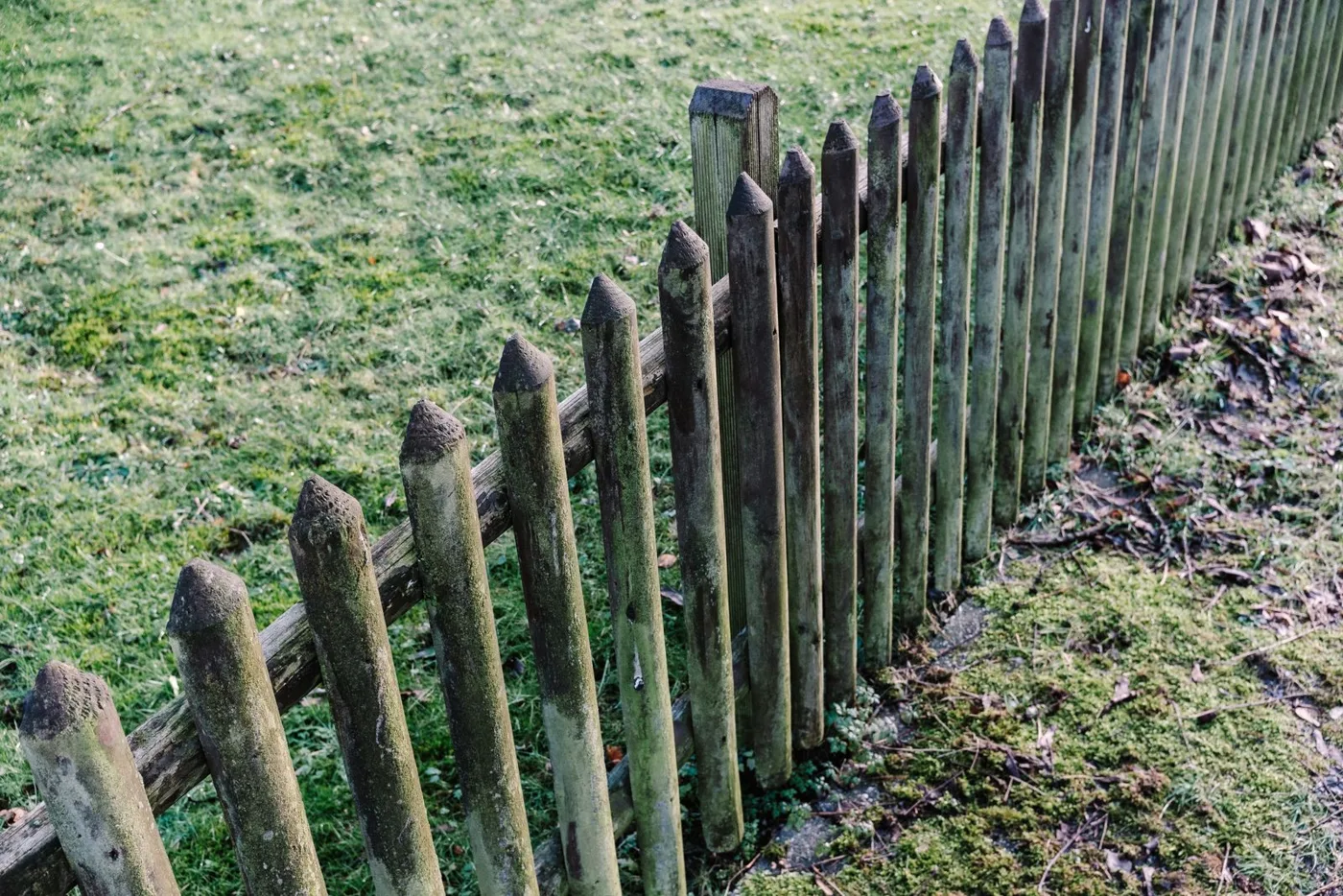
A fence inspection is most useful before you decide that the answer is paint, a new panel or a handful of screws. Posts, rails, panels and gates fail in different ways, and what appears to be a cosmetic lean can involve the support below ground. Begin with observations you can make without pushing, climbing or dismantling the fence.
Walk the line from a safe position
Look along the fence for changes in alignment, leaning posts and panels separating from their supports. Keep clear of sections that appear unstable, especially after a storm. Do not shake a leaning post to test how much life it has left. Photograph the section from a distance and from accessible angles without stepping into an unsafe area.
Note where soil, vegetation or stored materials touch the fence. Damp debris against a timber post may conceal deterioration, while a vine can hide broken connections. Clear only light, accessible debris when it is safe to do so. Heavy growth or a panel supported by vegetation should be assessed before anything is removed.
Separate gate problems from panel problems
A gate adds movement and load to its posts. Observe whether it catches the ground, pulls at a hinge or no longer meets the latch. Do not force it into position or use the latch to pull a leaning post upright. A gate that suddenly binds can indicate movement elsewhere, not simply a hinge that needs tightening.
Record the material, approximate panel size and visible fastening arrangement. For a contractor, those details help distinguish a single damaged component from a system that needs broader repair. Include nearby slopes, retaining features or structures, since the fence may not be the only thing affecting the alignment.
Clarify responsibility before ordering materials
Check ownership, boundary information and any shared-maintenance arrangements. Do not assume the finished side of a fence proves who owns it. If the fence is shared or belongs to a rental property, agree on the scope before removing anything. Local requirements can affect height, replacement and work near a boundary.
Any repair involving digging requires the appropriate utility-location process before ground disturbance. Keep children and pets away from gaps or unstable sections while arrangements are made. Temporary protection should not rely on the failing fence for support.
Make the repair decision after the structure is understood
A sound fence with a worn finish may need maintenance coating; a failed post needs a structural repair plan. Ask a repairer to explain which components can remain and why. Include removal of damaged materials and protection of nearby planting in the scope. Painting over the visible problem should be the last choice, not the first diagnosis.