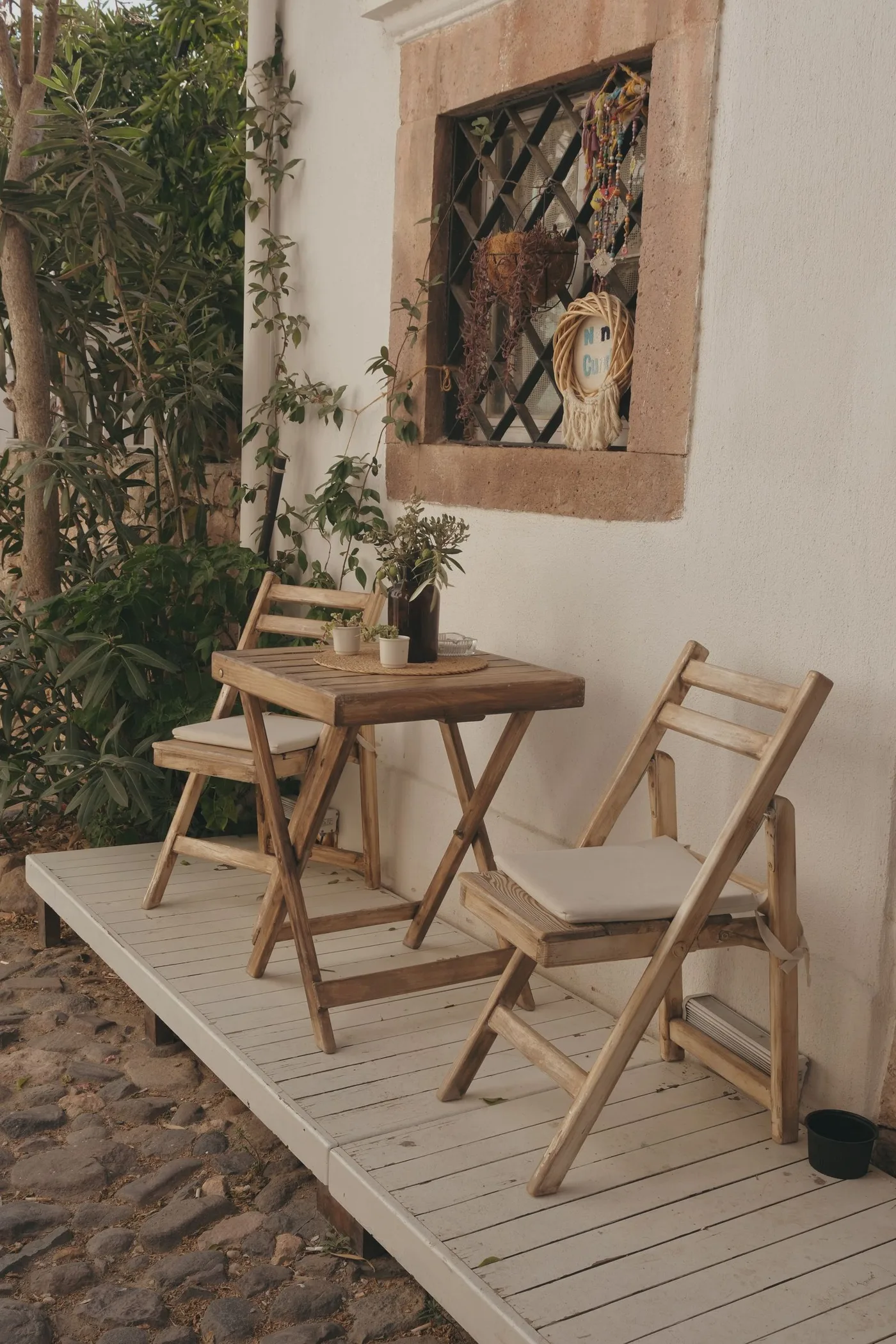
Wooden outdoor furniture can tolerate exposure only within the limits of its species, construction and finish. Some pieces are intended to weather in appearance, while others depend on a maintained coating. The useful question is not how to keep every bench looking new, but how to keep water from lingering where the furniture cannot dry.
Read the finish before choosing a treatment
Find the maker's care guidance and identify whether the surface is painted, stained, oiled or intentionally unfinished. A product suitable for one system may be incompatible with another. Do not apply oil simply because the wood looks pale after rain; the change may be normal weathering or a sign that the existing coating needs a different treatment.
Inspect joints, fasteners and the lower ends of legs. Discoloration alone does not establish structural damage, but a split joint, soft area or movement under ordinary handling deserves attention. Stop using furniture that appears unstable. Cosmetic cleaning should not be used to make a damaged chair look ready for service.
Change the conditions that hold moisture
Move the furniture, with help where needed, onto a stable surface that does not keep the feet in standing water. Keep leaves and soil from collecting against the legs. If the piece is on paving, check whether a planter or gutter discharge repeatedly sends water beneath it. Solving that source can matter more than changing the cleaning product.
Covers need to be used as their manufacturer intends. Covering already wet furniture tightly can leave moisture trapped against the surface. Allow the furniture to dry first where possible and use a properly fitted cover that provides the intended ventilation. Secure it against wind without tying it in a way that damages the furniture or creates a trip hazard.
Leave space around stored pieces so air can circulate and you can inspect them. Stacking may be permitted for some chairs and damaging for others. Protect contact points using the maker's method rather than sandwiching damp cushions between wooden surfaces.
Clean gently, then decide whether refinishing is due
Remove loose debris and use a cleaner approved for the actual wood and finish. Avoid aggressive pressure washing, wire brushes or a strong household mixture unless the manufacturer specifically permits the method. Test a small area and allow it to dry. A clean wet surface can look dramatically different from its final dry appearance.
If maintenance coating is needed, follow preparation, moisture and weather requirements for the selected system. Do not coat damp wood just to finish before the next shower. Keep a record of the product and date, and inspect after periods of prolonged wet weather. For unknown old paint or a valuable piece, obtain assessment before sanding or stripping.