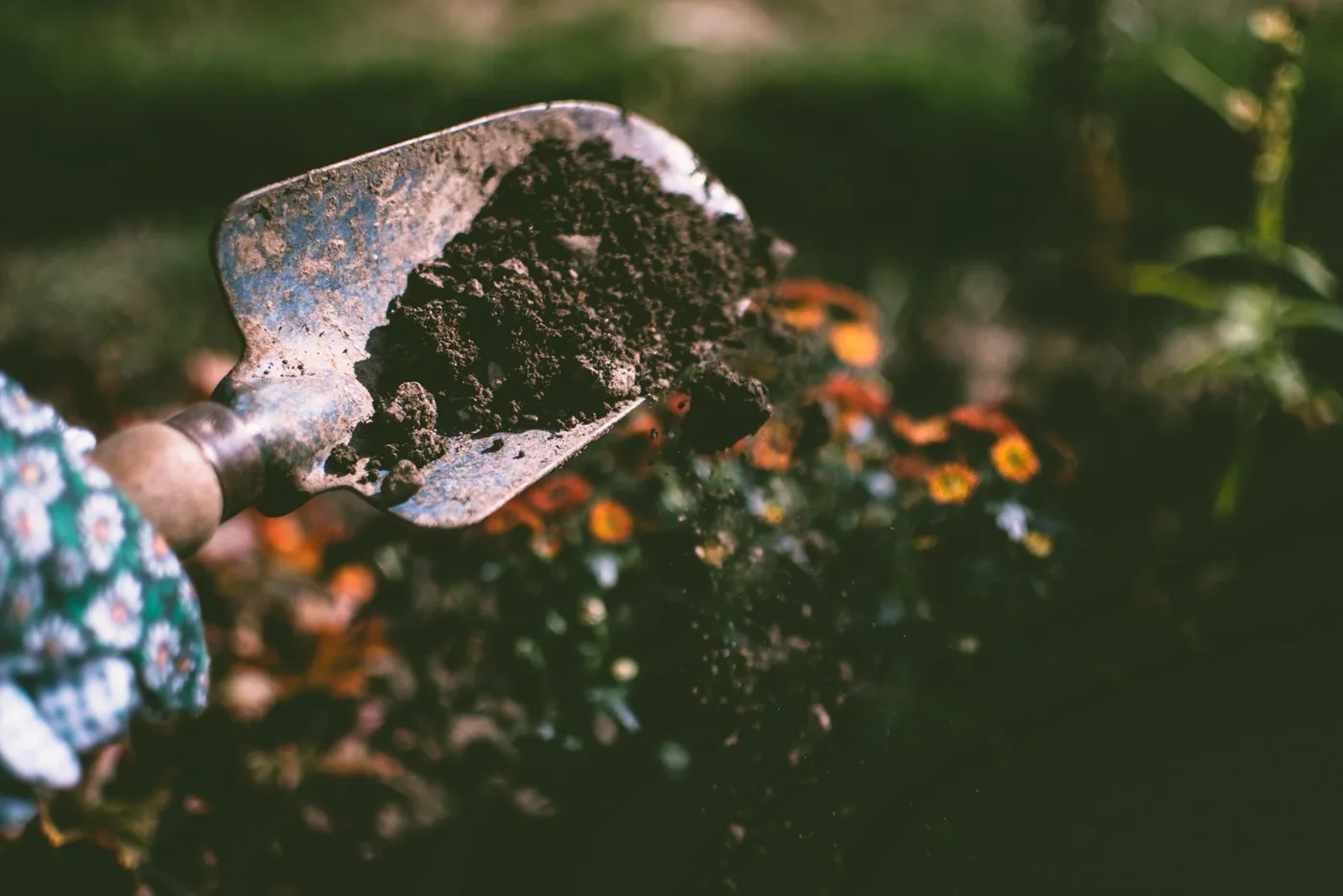
Putting a muddy tool straight into a shed carries moisture and soil into the place where the tool is supposed to stay protected. A short return routine can prevent that buildup without turning every gardening session into a restoration project. Start with ordinary hand tools; powered equipment and batteries need their own manuals.
Remove what the job left behind
Brush loose soil from a shovel or trowel using a tool that will not damage its finish. Where washing is permitted, use only enough water to remove the remaining dirt and keep water out of joints or handles that the maker says should stay dry. Do not soak a wooden handle because the metal blade is muddy.
Check cutting tools separately. Sap and plant residue may require an approved cleaner, and tools used around diseased plants may need disinfection as well as cleaning. University of Minnesota Extension distinguishes these tasks. Follow disease-specific and product instructions rather than treating a quick hose rinse as disinfection.
Inspect while the tool is visible. A loose head, cracked handle or damaged edge should be marked for repair and taken out of use. Do not put it back among ready-to-use tools where another person will discover the fault while working. Replacement parts need to match the tool rather than simply fit approximately.
Dry before storage, not after
Wipe compatible surfaces and allow remaining moisture to evaporate in a safe position. Open or separate components only as the manufacturer directs. Do not leave sharp tools balanced on their points or across a doorway while they dry. A protected drying place makes it easier to complete the routine even when rain starts at the end of the job.
Use any corrosion protection or lubricant specified by the maker sparingly and in the correct location. An oily surface that collects grit is not helpful, and some products may be unsuitable near edible crops or particular handle materials. Keep the original label and instructions instead of decanting a maintenance product into an unmarked bottle.
Store tools on suitable supports with edges protected and handles easy to reach. Keep them away from a damp floor and inspect the shed for leaks if rust returns despite careful drying. A small basket can hold tools awaiting maintenance, but hazardous or sharp items still need secure storage. The final step is returning each sound, dry tool to a place where its condition can be seen before the next use.