A fixed watering reminder can help you remember your containers, but it should not make the watering decision. A small pot in wind, a large glazed planter in shade and a recently planted basket can dry at very different rates. Check the growing medium and the plant's requirements, then water the containers that actually need it.
Learn what each container holds
Record the plant, pot size, drainage arrangement and growing medium. Grouping containers visually does not mean they share water needs. A moisture-loving plant and a drought-adapted plant may need different checks even when their pots match. If the plant is unidentified, establish its care requirements before choosing a routine.
Confirm that drainage holes are open and that the pot is not sitting in collected water unless it is part of a system designed for that purpose. A decorative outer pot can conceal a full reservoir beneath an ordinary nursery pot. Check inside rather than assuming that water disappearing from the surface has left the root area.
Use several observations together
Feel the medium at a depth appropriate to the plant and container rather than judging only the sun-dried top layer. For a manageable pot, learning its relative weight after watering and as it dries can provide another clue. Avoid lifting a heavy planter or leaning over a balcony to make this check.
Watch the plant, but do not treat wilting as automatic proof of thirst. Root problems, excessive water and heat stress can produce similar appearances. If the medium remains wet while the plant declines, repeatedly adding water can make diagnosis harder. Check drainage and seek plant-specific advice when symptoms persist.
Cheap moisture meters can be useful prompts, but their readings depend on placement and the growing medium. Do not let a single number override an obviously saturated pot or a plant's known needs. Keep observations simple enough that you can repeat them consistently.
Water the medium, then let it drain
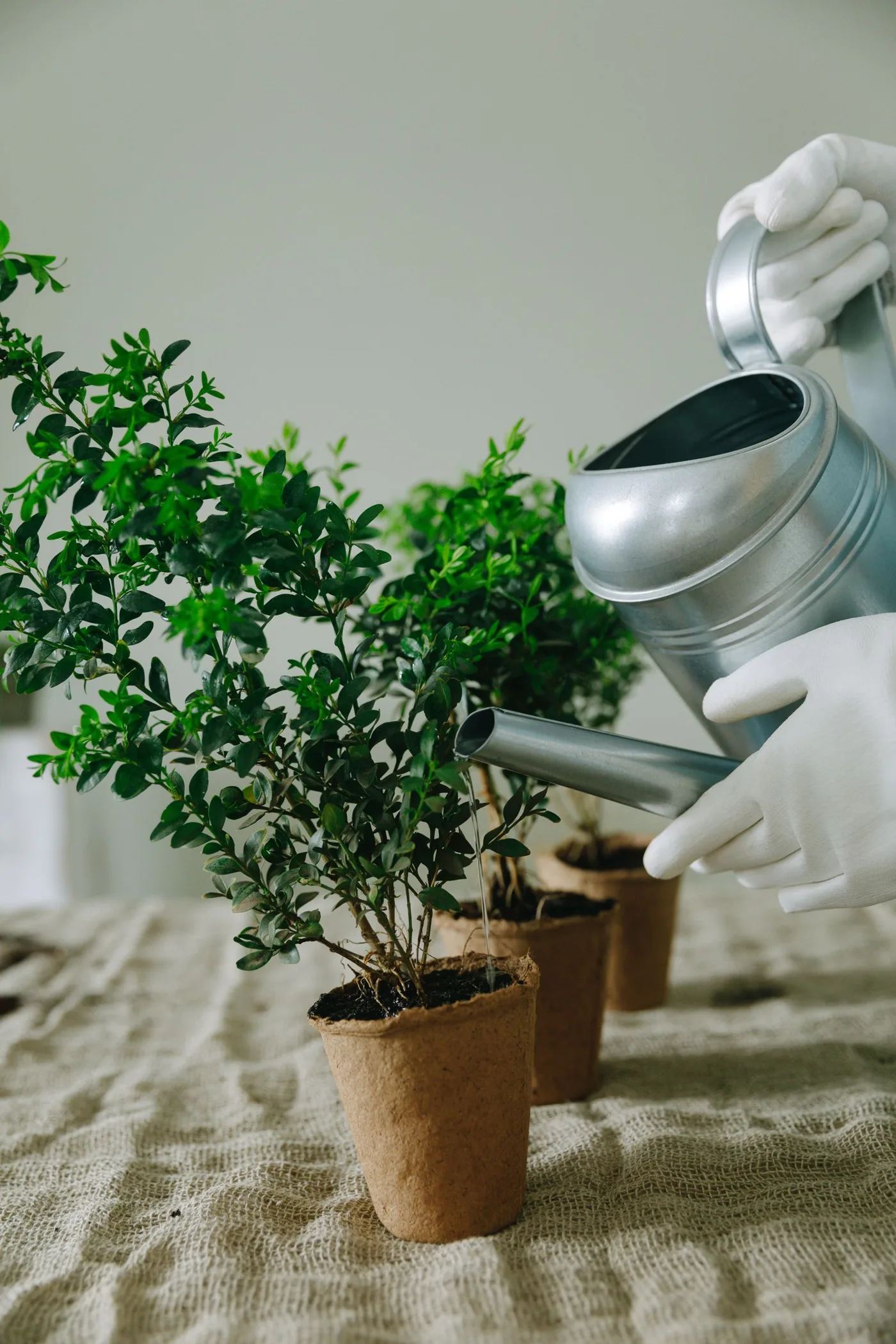
When watering is needed, apply it to the root medium using a gentle flow suited to the pot. Allow time for absorption rather than sending a fast stream over the rim. If water runs immediately down the gap beside a very dry root ball, slow down and follow plant-specific guidance for rewetting the medium.
For ordinary freely draining containers, allow excess water to leave and empty collected water as appropriate. Do not leave pots standing in full saucers by default. Keep runoff from creating a slip hazard or dripping onto a neighbor's space. Self-watering planters require their own reservoir instructions rather than this general routine.
Change the check when conditions change
Wind, heat, plant growth and a move from shade to sun can alter how quickly a container dries. Rain may not reach pots beneath an overhang or dense foliage. Check the medium after rain instead of assuming the forecast has done the watering. University of Minnesota Extension emphasizes that container care depends on these changing conditions.
Before an absence, ask the person helping to check named groups rather than pour the same amount into every pot. A brief note such as check the small sunny pots first is more useful when paired with the actual moisture check and plant requirements. Review any automatic watering arrangement before leaving; a timer is a delivery system, not proof that each container receives the right amount.
For a mixed group of containers, a useful check record might have three columns: pot, observed medium condition and action taken. One sunny pot may need watering while a shaded pot beside it still feels moist at the appropriate depth. Writing those observations for a week helps you notice the difference without inventing a permanent schedule. If both suddenly stay wet much longer after a move, reassess the new exposure and drainage rather than continuing the old routine. The record is a way to learn the containers, not a reason to water when the evidence says otherwise.